
Clinically reviewed by Dr Karla Lombana, DVM, on November 12, 2026.
When a horse drops soggy, half-chewed balls of food while it eats, it is called quidding, and it usually means chewing is painful or difficult. The most common cause is a problem in the mouth, so the right next step is a full mouth exam by your veterinarian.
From Dr Karla Lombana, DVM: Many owners call about quidding when it is not true quidding at all. A horse that drops some grain, scatters hay or has a little food fall out of its mouth may simply be a messy eater.
When to Call the Vet Immediately
Call your veterinarian straight away if your horse is dropping feed and you also see any of these:
- Your horse goes off feed, or does not seem able to pick up food properly.
- Food, water or slimy saliva comes out of the nose, or your horse stretches its neck and coughs while eating. These may be signs of choke, which is a blockage in the food pipe.
- The quidding started suddenly after an accident or injury, or you notice anything unusual, such as swelling or discharge.
- One side of the face looks droopy, such as a lower ear, eyelid or lip.
- New swelling on the face or jaw, or a smelly discharge from one nostril.
- Signs of colic, such as going off feed, being dull and low on energy, pawing, rolling or looking at the belly.
This list does not cover every problem. If you are worried, call.
From Dr Karla Lombana, DVM: When you call, tell your vet how long this has been going on, and whether it happens with all feeds or only some, such as hay or grain. Say whether your horse is otherwise acting normally or seems quiet and dull. If your horse is ridden, mention any trouble with the bit.
General education only: This article does not provide a diagnosis or individual veterinary advice. If you are concerned about your horse’s health, contact your veterinarian. Do not delay urgent veterinary care while using this guide.
While you wait for the vet, you can learn what to look for and what to write down. If you need help with choke while the vet is on the way, these steps for choke in horses before the vet arrives can help.
Quidding Looks Different From Messy Eating
Some horses are just messy. They pull out a big mouthful of hay and drop half of it over the door or on the floor. That hay is long and dry, and it has not been chewed.
Quidded food is different. It has been chewed, it is wet with saliva, and it is often rolled into a ball or a short wad. Your horse is trying to chew, finds it hurts or does not work, and lets the food fall out.
| What you see | Messy eating | Quidding |
|---|---|---|
| Dropped food | Long, dry hay that looks like it came straight from the net | Wet, chewed balls or wads, often green |
| When it happens | While pulling hay out or looking around | While chewing |
| Eating speed | Normal | Often slow, with stops and starts |
| Other signs | Usually none | Head tilted while chewing, odd chewing noises, drooling, bad breath, weight loss, long bits of hay or whole grain in the manure |
If you are not sure, collect a few pieces of the dropped food and take a photo. Your vet can tell a lot from it.
Most Causes Are in the Mouth, but Not All
A horse’s cheek teeth are the big back teeth along the sides of the mouth. A horse is born with all the tooth it will ever have, and these teeth keep slowly pushing up into the mouth all its life. That is different from people, dogs and cats. The teeth need to wear evenly so the horse can grind food. When something goes wrong in the mouth, chewing starts to hurt. Learning how horses chew and grind makes this easier to picture.
Common mouth problems include:
- Sharp edges on the back teeth that cut the cheeks or tongue.
- Uneven wear along the cheek teeth, which leaves a bumpy grinding surface for hay.
- Sharp points on the cheek teeth. On the lower teeth they form on the inside edge, next to the tongue. On the upper teeth they form on the outside edge, next to the cheek.
- A broken, loose or infected tooth.
- Food packed into gaps between the cheek teeth. The trapped food rots and makes the gums sore. This is one of the most common causes in adult horses.
- Baby teeth that are loose or stuck in young horses, usually between about 2 and a half and 5 years old.
- Something stuck in the mouth, such as a stick or a sharp piece of plant.
Gaps between the lower back teeth are easy to miss. The trapped food can hide under the tongue, right at the back of the mouth. A quick look without sedation may not find it. A proper check usually needs your horse sedated, which means given calming medicine by the vet. The vet also uses a mouth gag (sometimes called an oral speculum) to hold the mouth open safely, a bright light and often a dental mirror or a small camera.
Sometimes the mouth looks fine and the problem is somewhere else. A sore jaw joint, a broken jaw after a kick, or a nerve problem that makes one side of the face droop can all cause quidding. That is why a good vet looks at the whole horse, not just the teeth.
Write Down These Things Before the Vet Comes
Vets who see a lot of quidding horses ask the same questions. Having the answers ready makes the visit faster and more useful. Use this record sheet for a few days before the appointment.
| What to note | What to write down |
|---|---|
| How long it has been going on | The date you first noticed, and whether it started suddenly or slowly |
| Constant or comes and goes | Every meal, some meals, or on and off |
| Which foods | Hay, hard feed, grass, or all of them |
| Time of day | Morning, evening, or no pattern |
| How much is dropped | A few bits or piles of wads |
| Weight trend | Weight tape reading once a week, at the same time of day |
| Manure | Long pieces of hay or whole grain in the manure |
| Mouth and face | Bad breath, drooling, swelling, head tilt while chewing |
| How your horse seems otherwise | Acting normally, or quiet and dull |
| Under saddle | Any trouble with the bit, if your horse is ridden |
| Last dental check | The date, and who did it |
Also take a short video of your horse eating hay for about one minute. Film from the side, from a safe spot. Odd chewing or a head tilt is often easier to see on video.
A weight tape is useful because many horses naturally lose a little weight over winter. A weekly reading shows your vet the real trend.
From Dr Karla Lombana, DVM: A common mistake is thinking quidding is no big deal, or thinking it is a disaster. It is a normal thing to find, especially as horses age and their teeth change, or while young horses are growing. Your vet can help guide you.
What You Can Do While You Wait
- Keep feeding. Do not stop food unless your vet tells you to.
- Ask your vet about softer food for now, such as soaked hay cubes or soaked pellets. These can be easier to chew while the cause is found.
- Clear the dropped wads each day. It shows you how much is being dropped.
- Do not give pain medicine unless your vet says so. It can hide signs the vet needs to see.
- Do not put your hand far into the mouth. Horses’ back teeth are sharp and their jaws are strong.
Regular Dental Checks Help Prevent Quidding
Many problems that cause quidding start small. Regular checks catch them early. As a general guide from veterinary sources:
- Horses that mainly graze usually need a check once a year.
- Horses kept in a stall on hay and grain usually need checks at least twice a year.
- Young horses, about 2 and a half to 5 years old, often need checks twice a year while their adult teeth come in.
- Older horses, often from about 15 years, may need checks every six months.
Your own vet may suggest a different schedule for your horse. Planning ahead is easier once you understand routine horse dental care and know who should float your horse’s teeth.
Quidding in horses is often one of the first signs of a mouth problem, and mouth comfort is one part of everyday horse health.
Check Your Horse’s Overall Wellness
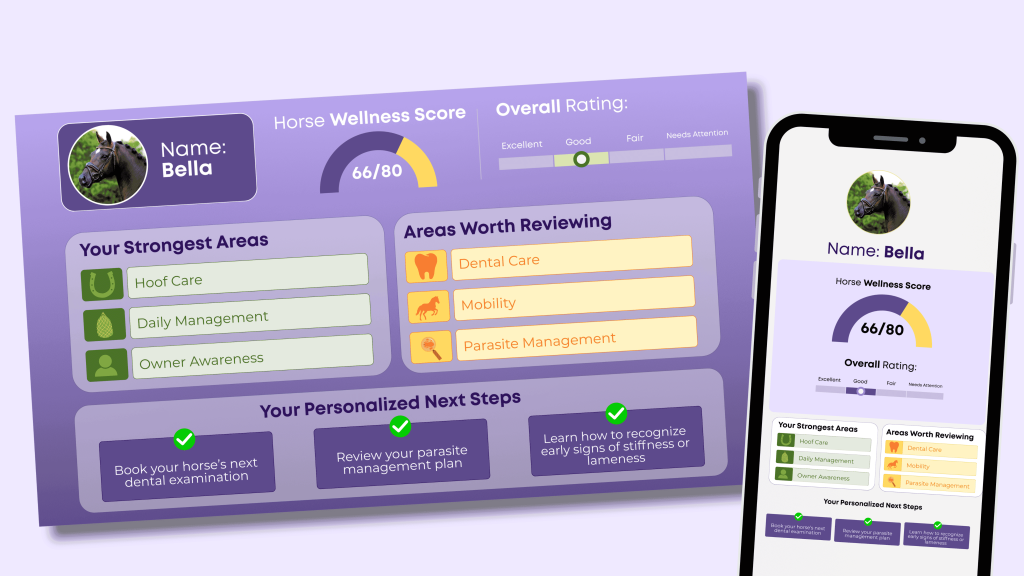
Chewing problems often show up alongside other changes, like weight loss or a dull coat. The free Horse Wellness Score quiz takes a few minutes and gives you a clear picture of your horse’s overall health habits.
If you want to go further, Horse Health HQ membership includes self-paced video lessons on daily health checks, including spotting changes in appetite early.
Common Questions About Horses Dropping Feed
A horse can still quid after its teeth were floated
Floating smooths sharp edges. It does not always fix food packed in gaps, a loose tooth or a problem outside the mouth. If quidding carries on after a dental visit, tell your vet.
Older horses quid more often
Teeth wear down and gaps can open with age. Older horses may need softer food and more frequent checks. Your vet can help you plan both.
Long hay in the manure can mean poor chewing
If your horse cannot chew well, it may swallow food before it is ground up. You may see long pieces of hay or whole grain in the manure. Poor chewing can also raise the risk of choke and some types of colic.
We use AI-assisted research and drafting to explain horse health topics in plain language. A licensed equine veterinarian reviews each article for clinical accuracy before publication. Sources are listed below.
Sources