
Clinically reviewed by Dr Karla Lombana, DVM, on November 12, 2026.
The best way to prevent sand colic is to stop your horse swallowing sand: feed hay and grain off the ground, and do not let grass get grazed down to the dirt. Popular shortcuts, like the home manure test and adding psyllium to feed, are less reliable than many owners think, so plan the rest with your vet.
From Dr Karla Lombana, DVM: Sometimes it is just not possible to stop a horse swallowing sand, especially in large sandy lots where horses scatter their feed. We can do our best, such as feeding in large tubs or on mats, and keeping sand out is always best. But in sand-prone areas, such as desert climates, vets often recommend adding psyllium regularly, even though the research is mixed.
Urgent: call now
Call your veterinarian straight away if your horse shows any signs of colic, such as:
- Eating less than normal, pawing, looking back at the belly or kicking at it
- Lying down a lot, rolling or trying to roll
- Sweating, or stretching out as if to pee
- Straining to pass manure, or passing much less manure than normal
- Not eating, or seeming dull and quiet
Also call if your horse has watery diarrhea, or diarrhea that lasts more than a day or two or keeps coming back. Do not give sand treatments or pain medicine yourself unless your vet tells you to. Follow these steps for horse colic first aid while you wait.
From Dr Karla Lombana, DVM: In an emergency, giving clear information over the phone really matters. If you can, check your horse’s basic vital signs, such as heart rate and temperature. Tell your vet whether your horse has passed manure in the last 24 hours and what it looked like. Horses passing sand often have soft “cow patty” manure instead of well-formed balls. Some horses are also slower to eat for a few days before they show bigger signs, so mention that too. It also helps to say how you feed, such as off the ground, on mats, or in feed tubs that you clear of sand regularly.
General education only: This article does not provide a diagnosis or individual veterinary advice. If you are concerned about your horse’s health, contact your veterinarian. Do not delay urgent veterinary care while using this guide.
Sand Colic Starts With Swallowed Sand
Horses swallow sand by accident when they eat hay or grain from sandy ground, or graze very short grass on sandy soil.
The sand sinks and collects in the gut. A little can pass through. A lot can irritate the gut wall or build up into a heavy blockage called an impaction, which is a large mass of sand and feed. That can cause colic, which means belly pain.
It can be hard to know how much sand is in your horse’s belly. Your vet may listen low on the belly and hear the sand. But it is impossible to truly measure without an X-ray of the belly, or even surgery to look inside. Horses can show signs of colic from a lot of sand or a little. It depends on the horse and how much the sand irritates its gut.
Sand does not always cause dramatic colic signs or discomfort. Associate Professor Ben Sykes, an equine internal medicine specialist, notes in lecture notes for vets that sand can also show up as:
- Mild colic that keeps coming back
- Diarrhea or loose manure
- Weight loss or poor performance
- A horse that is touchy when you do up the girth, which can look like stomach ulcers
He also points out that some horses pick up a lot of sand and others in the same paddock do not. Nobody fully knows why. So one horse with sand problems does not mean every horse on the property has them. One healthy horse also does not mean the others are clear. If you see loose manure that keeps coming back, compare what you are seeing with diarrhea in horses and talk to your vet.
Which Horses Are Most at Risk
| Risk | Why it raises risk | What to change |
|---|---|---|
| Hay or feed put on sandy ground | Horses pick up sand with every mouthful | Use a hay net, rack, tub or feeder, set on rubber mats or concrete |
| Short, overgrazed paddocks | Horses graze close to the soil | Rest paddocks before grass gets very short |
| Sandy dry lots or pens with little forage | Bored, hungry horses pick at the ground | Give more hay, in a feeder, and feed hay before turnout |
| Feeding in an arena or round pen | Arena surfaces are often sand | Feed somewhere else |
| Dirty mats and tubs | Sand builds up and becomes a new sand source | Sweep mats and empty sand out of tubs |
| Living in a sand-prone area, such as a desert climate | Swallowing some sand is hard to avoid completely | Do all of the above, and ask your vet whether regular psyllium belongs in your plan |
| A horse that has had sand colic before | The same sand source is still there | Find and fix the source with your vet |
Your Sand Colic Prevention Checklist
Use this checklist once a month, and after any change in paddock, feed or weather.
- Hay is fed in a hay net, rack, tub or feeder, never on bare sandy ground.
- Feeders and tubs sit on rubber mats or concrete.
- Mats are swept, and sand is emptied out of tubs, so they do not become a new sand source.
- Horses get hay before turnout on sandy paddocks, so they are not hungry and picking at the dirt.
- Paddocks are rested before grass is grazed down to the soil.
- Each horse gets plenty of forage every day.
- Salt is available in a holder or pan off the ground.
- Clean water is always available.
- You know which horses on the property have had colic, diarrhea or weight loss before.
Plenty of forage matters for two reasons. Hungry horses pick at the ground more. Hay also helps move sand through the gut. In a University of Florida study reported by Kentucky Equine Research, horses fed more hay moved more sand out than horses given psyllium. The higher amount was about 2.5% of body weight a day, or 25 pounds of hay for a 1,000-pound horse. Ask your vet before making big changes to how much your horse eats, especially if your horse is overweight. If you use hay nets, slow feeders for horses can keep hay off the ground and make it last longer.
Some experts think horses that lack salt may eat soil to get it. A salt block or loose salt in a holder is cheap and easy.
From Dr Karla Lombana, DVM: Never assume sand colic cannot happen to your horse just because you use feeders or mats, or take other sensible steps. Watch for mild signs of colic, such as eating a little less or grazing slowly. Horses that are building up sand may also start to lose condition before they show bigger colic signs. Look for a poor coat or a loss of topline (the muscle along the back). Notice small changes in their attitude.
Two Popular Sand Tricks Are Less Reliable Than They Look
The home manure test can miss sand
Many owners put a few manure balls in a glove or bag of water and look for sand at the bottom. Dr Sykes says studies have not shown this test to be a reliable way to check for sand. A clear result does not mean your horse is free of sand. Some sand at the bottom does not tell you how much is inside. It only shows what sand, if any, has passed in the handful of manure you tested.
If you do the test, treat it as a clue only. Write down what you saw and tell your vet. Never use it to decide that colic is “not sand”.
Psyllium in feed is not a proven sand remover
Psyllium is a fiber product sold to “clear sand”. The research is mixed. In several studies, it did not clear more sand than hay alone. Dr Sykes’ review of the research for vets found that psyllium in feed, with or without probiotics, has not been shown to clear sand.
Even so, in areas with a lot of sand, vets often recommend psyllium alongside the feeding and paddock changes above. Make a plan for your own horse with your vet. Put keeping sand out of your horse first. Then add regular preventive care, including a good yearly health exam where your vet listens low on the belly for sand.
When a vet confirms a lot of sand, some treatments have worked in studies. The vet gives them through a stomach tube over several days. That is a job for your vet, not the feed bucket.
How Your Vet Checks for Sand
Your vet looks at your horse’s history, the sand on your property, an exam and sometimes manure. To see sand inside the belly, they may use:
- Ultrasound on your farm, which can sometimes help, although sand can be hard to judge this way.
- X-rays of the belly, which are the best test. Large horses are harder to X-ray, so this may mean a trip to a clinic with a bigger machine.
If your horse lives on sandy ground and has mild colic that keeps coming back, loose manure or weight loss, ask your vet whether a sand check makes sense.
Sand colic is one part of keeping your horse’s gut healthy, and gut health is a big part of everyday horse health. To learn more about colic signs and what to do before your vet arrives, you can register for the free training How to Understand and Manage Colic in Horses.
Check Your Horse’s Overall Wellness
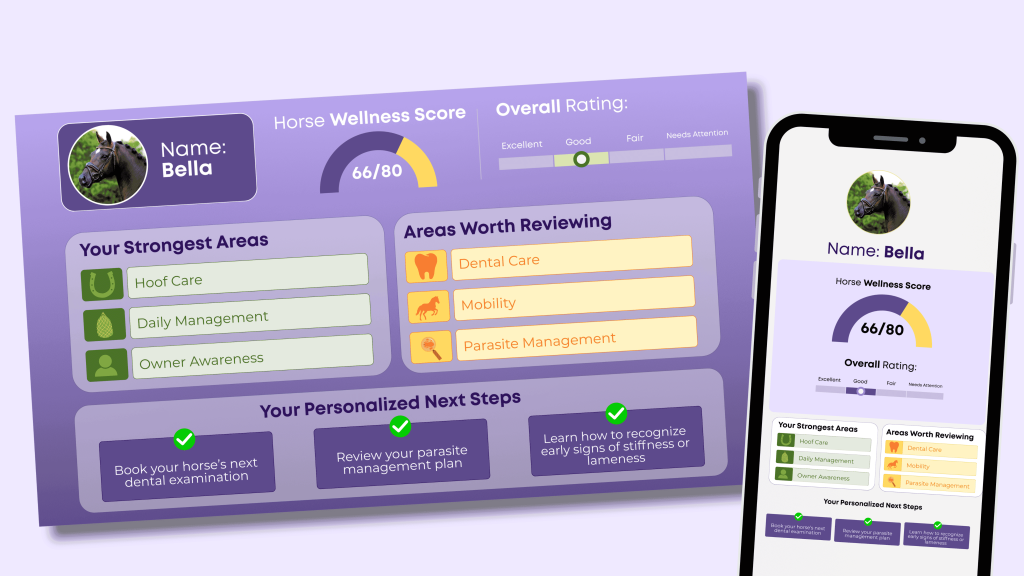
Good sand habits are part of everyday care. The free Horse Wellness Score quiz takes a few minutes and shows you which parts of your horse’s routine to work on first.
If you want to go further, Horse Health HQ membership includes a self-paced video lesson on digestive health, gut sounds and colic prevention.
Common Questions About Sand Colic
Why does my horse eat dirt or sand?
Most horses do not eat dirt on purpose. In Dr Karla Lombana’s years treating sand colic in Southern Arizona, the horses that swallowed the most sand were hungry or bored, often big eaters or horses on a restricted diet, picking at a sandy paddock for scraps. She usually recommended smaller, more frequent meals, or moving the horse somewhere less sandy. A few horses do eat sand by the mouthful, but they are uncommon.
How often should I give my horse psyllium for sand?
Ask your vet first, and keep sand out of your horse whatever you decide. In her sandy practice area, Dr Lombana usually advised one continuous week of psyllium every month as a precaution. She preferred pellets, because they mix into grain easily and more horses eat them. Use a product made for horses, with the scoop that comes in the tub, not a human fiber supplement.
How do vets treat sand colic?
On the farm, Dr Lombana focused on keeping the horse comfortable and moving the sand through, using fluids into a vein and treatments given by stomach tube, sometimes two or three times a day. That is a job for your vet, not something to try at home. Many horses improve with simple pain relief, but some colic again the next week or keep colicking. After any episode, work with your vet to find and fix the sand source.
When does sand colic need surgery?
It depends on how much sand is there, which is hard to know. Dr Lombana explains that a little sand and a lot can sound the same when a vet listens low on the belly, so listening is a clue, not a measure. X-rays at a referral hospital show more. Some horses have just a trace causing pain. Others have the whole colon full, and those horses may need surgery.
We use AI-assisted research and drafting to explain horse health topics in plain language. A licensed equine veterinarian reviews each article for clinical accuracy before publication. Sources are listed below.
Sources
- MSD Veterinary Manual, Intestinal Disorders Other than Colic in Horses (horse owner version; section on disease caused by eating sand or dirt)
- MSD Veterinary Manual, Colic in Horses (horse owner version, updated May 2026)
- University of Arizona Cooperative Extension, Preventing Sand Colic (az1759, 2018)
- Kentucky Equine Research, Avoiding Sand Colic in Horses
- Hammock and others, Failure of Psyllium Mucilloid to Facilitate the Evacuation of Sand from the Equine Large Intestine, AAEP Proceedings, 1998