

Learn how equine veterinarians investigate diarrhoea in horses, what tests they may recommend, and how treatment depends on the cause and severity.
Diarrhoea in horses can range from a mild, messy inconvenience to a serious medical emergency. For horse owners, one of the most frustrating parts is that diarrhoea is not a diagnosis by itself. It is a sign that something is irritating, inflaming, disrupting, or changing the way the gut is working.
That is why your veterinarian’s first job is not simply to “stop the diarrhoea.” Their first job is to work out how sick your horse is, whether the problem is likely to be infectious, and what may be causing it.

When is diarrhoea an emergency?
Call your veterinarian promptly if your horse has diarrhoea, especially if you notice any of the following:
- Fever
- Depression or lethargy
- Not eating
- Colic signs
- Fast heart rate
- Dark, red, purple, dry or tacky gums
- Signs of dehydration
- Profuse watery diarrhoea
- Diarrhoea after antibiotics or anti-inflammatory medication
- Diarrhoea in more than one horse on the property
While waiting for your veterinarian, keep your horse somewhere safe, give access to clean water, and avoid giving medication unless your veterinarian advises it. If an infectious cause is possible, your veterinarian may recommend isolating the horse from others.
⚠️ Biosecurity Reminder
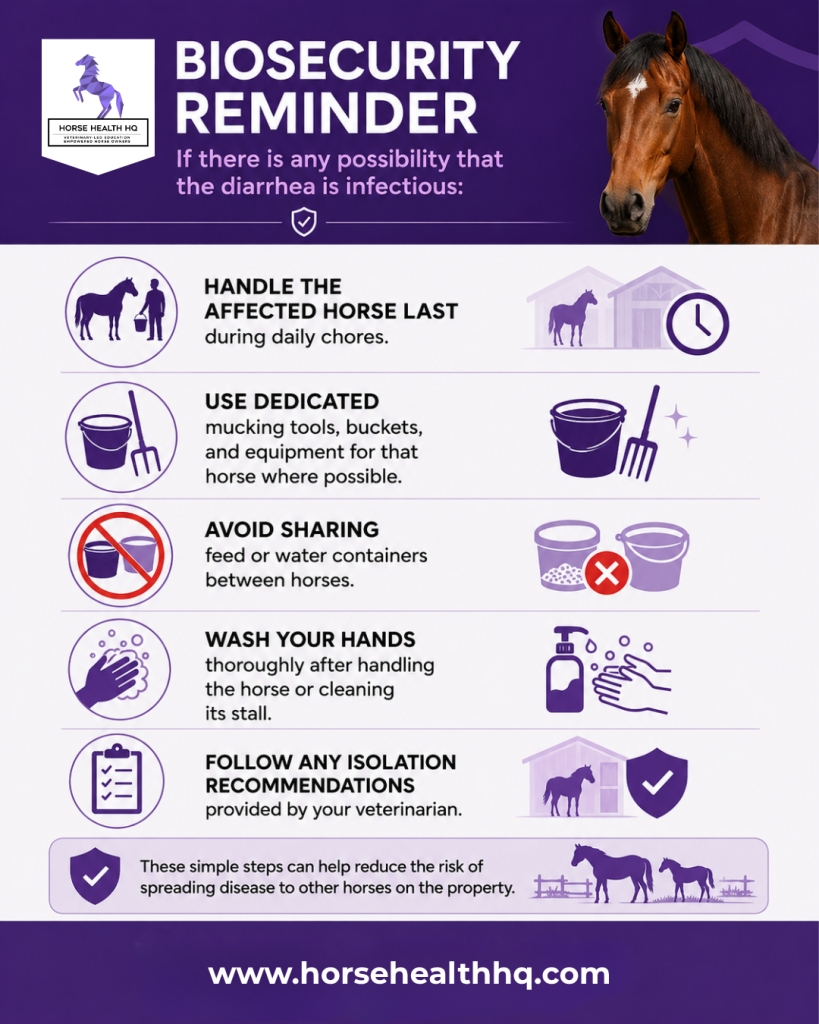
If there is any possibility that the diarrhoea is infectious:
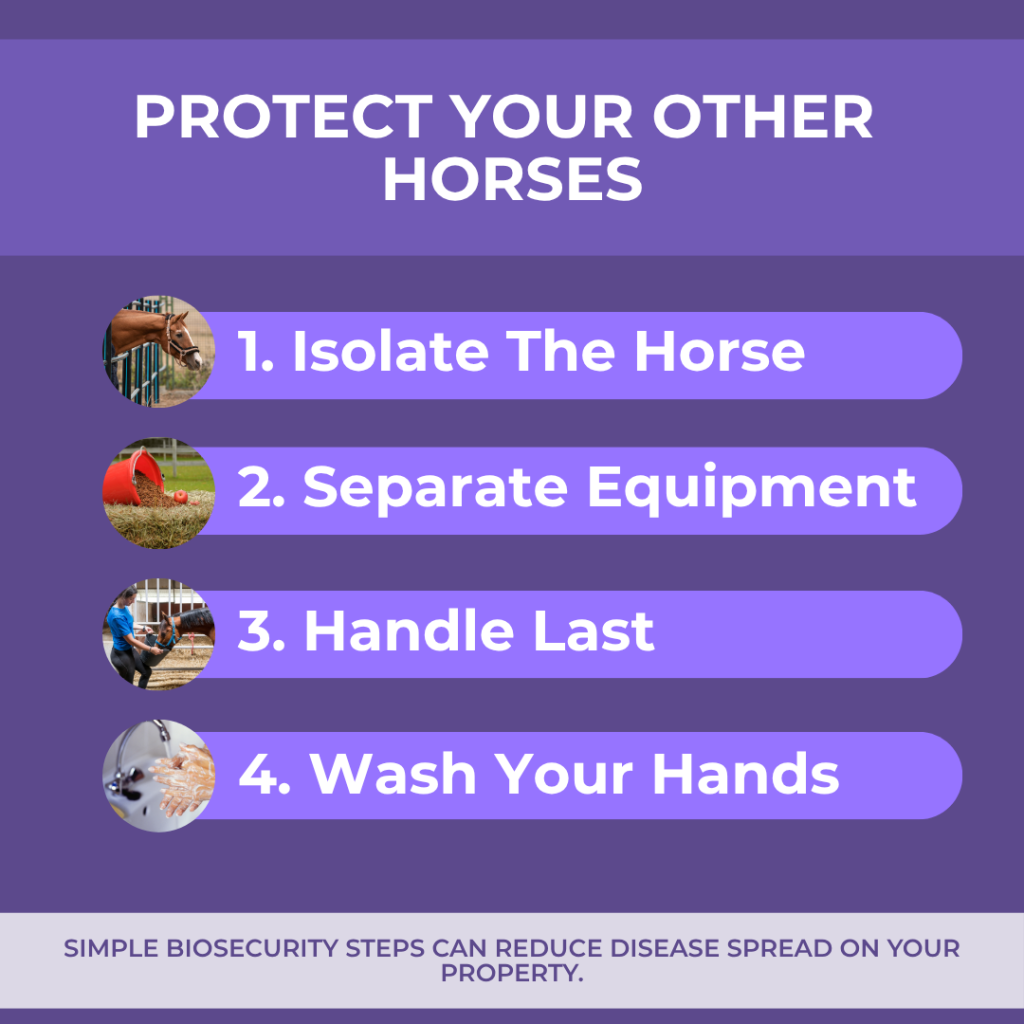
- Handle the affected horse last during daily chores.
- Use dedicated mucking tools, buckets, and equipment for that horse where possible.
- Avoid sharing feed or water containers between horses.
- Wash your hands thoroughly after handling the horse or cleaning its stall.
- Follow any isolation recommendations provided by your veterinarian.
These simple steps can help reduce the risk of spreading disease to other horses on the property.
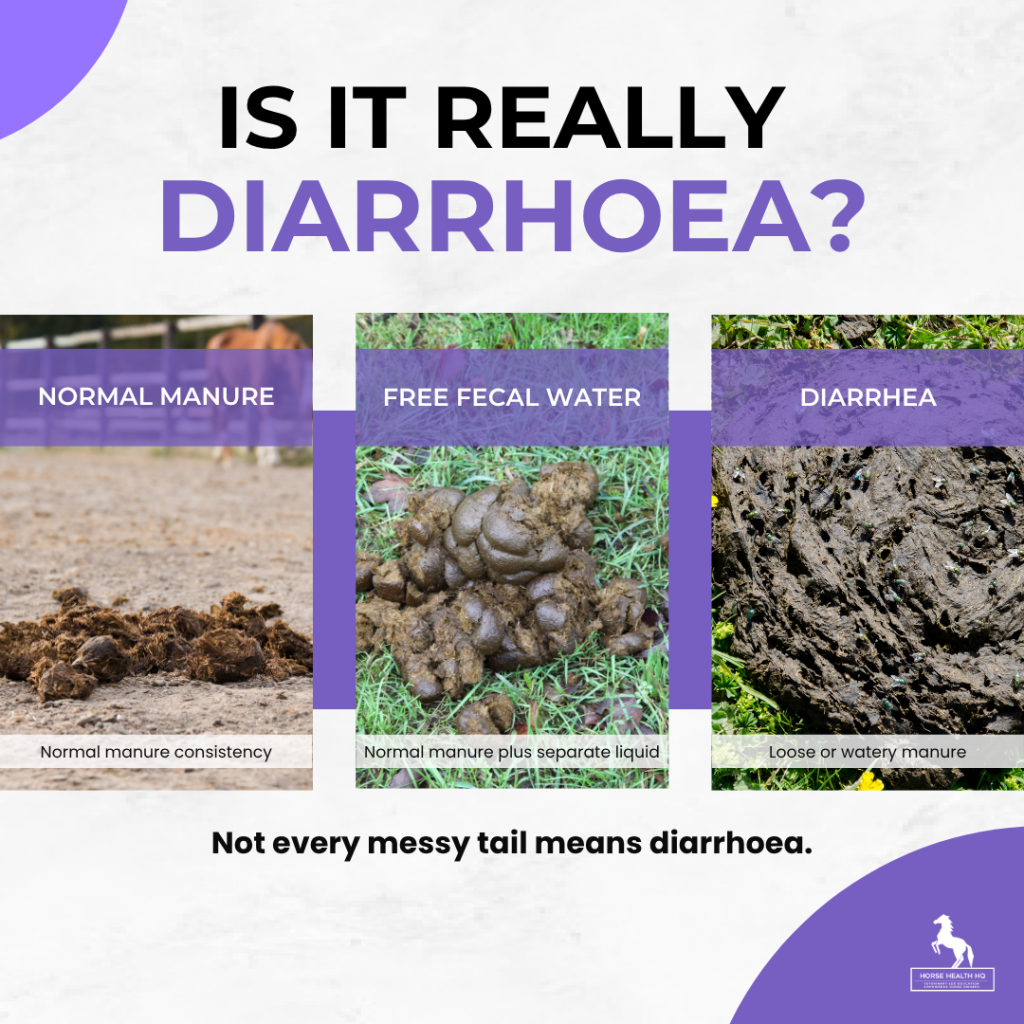
The first question veterinarians ask: is this true diarrhoea?
Not every watery mess under the tail is the same problem.
Some horses pass normal-looking manure balls but also pass a separate watery fluid. This is often called free faecal water or faecal water syndrome. It can be very frustrating for owners, but it is different from a horse passing consistently loose or watery manure.
Your veterinarian will want to know whether your horse is producing:
- Normal manure plus watery fluid
- Soft cow-pat manure
- Watery diarrhoea
- Intermittent diarrhoea
- Diarrhoea with weight loss
- Diarrhoea with fever, colic or depression
This distinction matters because a bright, well horse with free faecal water is approached very differently from a dull horse with severe watery diarrhoea.
Even if your horse seems bright and comfortable, mild diarrhoea or soft cow-pat manure that persists for more than 24–48 hours should still be assessed by a veterinarian. Ongoing loose manure can be an early sign of an underlying problem that is easier to address before it becomes more serious.

How veterinarians think about diarrhoea in horses
Veterinarians usually start by sorting diarrhoea into broad categories.
Acute diarrhoea comes on suddenly. These horses may become very sick quickly because they can lose large amounts of fluid and electrolytes. Causes can include infectious colitis, salmonella, clostridial disease, Potomac horse fever in some regions, dietary changes, toxins, sand, medication-associated colitis, or other gut disturbances.
Chronic diarrhoea lasts longer or keeps recurring. Causes may include parasites, sand accumulation, inflammatory bowel disease, poor fibre digestion, dental problems, long-term diet issues, NSAID-related gut damage, liver or systemic disease, and, less commonly, cancer such as lymphoma.
In many cases, the exact cause is not obvious on day one. That does not mean your veterinarian is guessing. It means they are ruling problems in or out step by step.
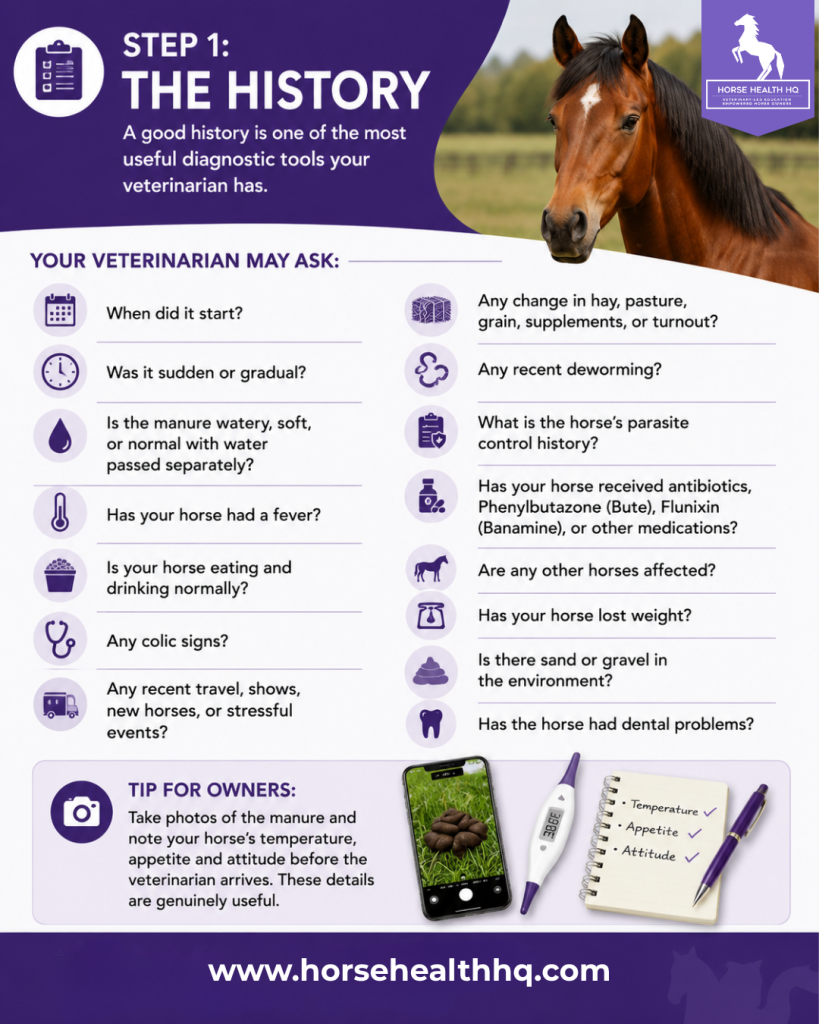
Step 1: The history
A good history is one of the most useful diagnostic tools your veterinarian has.
Your veterinarian may ask:
- When did it start?
- Was it sudden or gradual?
- Is the manure watery, soft, or normal with water passed separately?
- Has your horse had a fever?
- Is your horse eating and drinking normally?
- Any colic signs?
- Any recent travel, shows, new horses, or stressful events?
- Any change in hay, pasture, grain, supplements, or turnout?
- Any recent deworming?
- What is the horse’s parasite control history?
- Has your horse received antibiotics, bute, Banamine, or other medications?
- Are any other horses affected?
- Has your horse lost weight?
- Is there sand or gravel in the environment?
- Has the horse had dental problems?
Tip for owners: take photos of the manure and note your horse’s temperature, appetite and attitude before the veterinarian arrives. These details are genuinely useful.
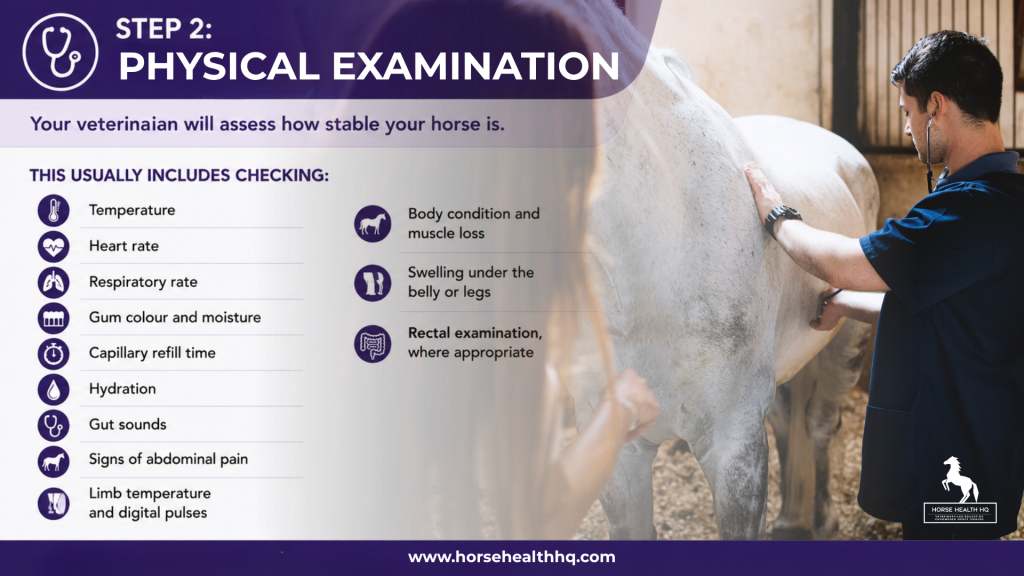
Step 2: Physical examination
Your veterinarian will assess how stable your horse is. This usually includes checking:
- Temperature
- Heart rate
- Respiratory rate
- Gum colour and moisture
- Capillary refill time
- Hydration
- Gut sounds
- Signs of abdominal pain
- Limb temperature and digital pulses
- Body condition and muscle loss
- Swelling under the belly or legs
- Rectal examination, where appropriate
A rectal exam may help your veterinarian feel for impactions, thickened intestine, masses, sand-related changes, or abnormal positioning of the gut.
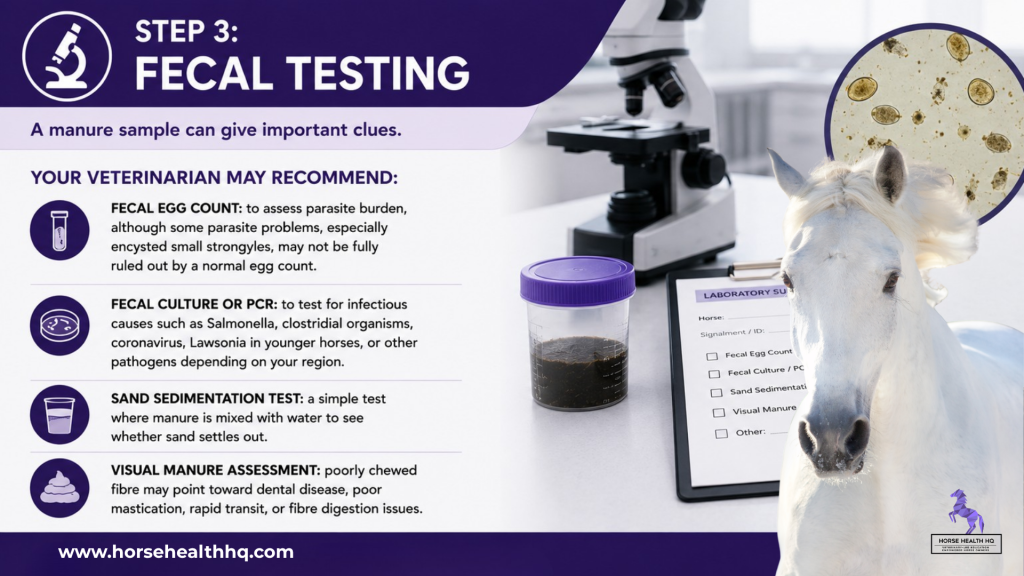
Step 3: Faecal testing
A manure sample can give important clues. Your veterinarian may recommend:
Faecal egg count: to assess parasite burden, although some parasite problems, especially encysted small strongyles, may not be fully ruled out by a normal egg count.
Faecal culture or PCR: to test for infectious causes such as Salmonella, clostridial organisms, coronavirus, Lawsonia in younger horses, or other pathogens depending on your region.
Sand sedimentation test: a simple test where manure is mixed with water to see whether sand settles out.
Visual manure assessment: poorly chewed fibre may point toward dental disease, poor mastication, rapid transit, or fibre digestion issues.
Step 4: Bloodwork
Blood tests help your veterinarian understand how the diarrhoea is affecting the whole horse.
Common bloodwork may include:
- Complete blood count
- Total protein and albumin
- Electrolytes
- Kidney values
- Liver enzymes
- Inflammatory markers such as fibrinogen or serum amyloid A
- Lactate in more serious cases
Low protein or low albumin can suggest protein loss through the gut, which may occur with significant inflammation, parasite disease, inflammatory bowel disease, lymphoma, or some sand-related problems.
Electrolyte changes matter because horses with diarrhoea can lose sodium, chloride, potassium, calcium and fluid. This is one reason severe diarrhoea can become dangerous quickly.
Step 5: Imaging
Depending on the case, your veterinarian may recommend ultrasound or X-rays.
Ultrasound can help assess intestinal wall thickness, fluid, abnormal gut movement, masses, or signs of inflammation. It can also help in cases where right dorsal colitis, inflammatory bowel disease, sand problems, or protein-losing gut disease are suspected.
Abdominal X-rays are especially useful for detecting sand accumulation in adult horses.
Step 6: More advanced testing
If diarrhoea is chronic, severe, recurring, or not responding to initial treatment, your veterinarian may discuss more advanced diagnostics.
These can include:
- Abdominocentesis, where a sample of abdominal fluid is collected
- Gastroscopy if gastric ulcers are suspected
- Rectal biopsy
- Duodenal biopsy
- Full-thickness intestinal biopsy in selected referral cases
- Referral hospital workup
Biopsies are usually considered when your veterinarian suspects inflammatory bowel disease, lymphoma, or another infiltrative intestinal condition.

How veterinarians treat diarrhoea in horses
Treatment depends on three things: how sick the horse is, what the likely cause is, and what the test results show.
Mild diarrhoea in a bright horse
If your horse is bright, eating, drinking and has normal vital signs, your veterinarian may recommend supportive care and monitoring.
This may include:
- Checking temperature daily
- Ensuring constant access to clean water
- Reviewing diet and supplements
- Removing unnecessary supplements temporarily
- Gradual forage or feed changes
- Probiotics or gut-support products in some cases
- Sand management if relevant
- Dental assessment if fibre is poorly chewed
If your veterinarian recommends oral electrolytes, remember the two-bucket rule: always provide a second bucket of plain, fresh water alongside any electrolyte water. Some horses dislike the taste of electrolyte solutions and may drink less if plain water is not available, potentially worsening dehydration.
Sometimes the best treatment is not adding more products, but simplifying the diet and identifying what changed.
Severe acute diarrhoea
A horse with profuse watery diarrhoea, fever, dehydration, colic signs or depression may need urgent treatment and possibly hospitalisation.
Treatment may include:
- Intravenous fluids
- Electrolyte correction
- Anti-inflammatory medication
- Plasma in horses with low protein
- Antibiotics in selected cases
- Toxin-binding agents in selected cases
- Laminitis prevention, such as icing the feet
- Careful monitoring of bloodwork, hydration and comfort
Not every horse with diarrhoea needs antibiotics. In fact, veterinarians use them carefully because antibiotics can sometimes worsen gut disruption. They are more likely to be considered when the horse is systemically ill, has very low white blood cells, signs of sepsis, or a specific infection requiring antimicrobial treatment.
If oral electrolytes are used as part of home care or recovery, continue to follow the two-bucket rule and ensure unrestricted access to plain water at all times.
Sand-related diarrhoea
If sand is suspected or confirmed, treatment may include:
- Psyllium or other sand-clearing protocols
- Fluids in more significant cases
- Pain relief if needed
- Follow-up imaging or testing
- Management changes to reduce sand intake
Prevention may involve feeding off mats, avoiding feeding hay directly on sandy ground, increasing forage access, and managing turnout areas.
Parasite-related diarrhoea
If parasites are involved, your veterinarian will choose a deworming plan based on the horse’s age, history, faecal results, season, region and risk factors.
This is important because the wrong approach can be ineffective or even risky in some horses. Young horses with suspected larval cyathostominosis, for example, may be very unwell and need more than a simple dewormer.
Diet-related diarrhoea
Some horses develop diarrhoea after a sudden change in hay, pasture, grain or supplements. Your veterinarian may recommend returning to the previous diet if possible, then making any future changes gradually over 7–14 days.
For some horses, improving fibre quality helps. This might include better-quality hay, soaked hay cubes, beet pulp, or alternative fibre sources. Dental care is also important because poorly chewed fibre can contribute to abnormal manure.
Medication-associated diarrhoea
If diarrhoea develops while your horse is receiving medication, especially antibiotics or NSAIDs such as phenylbutazone or flunixin, contact your veterinarian before giving the next dose.
NSAID-associated right dorsal colitis can be serious and may require specific treatment, diet changes and monitoring.
Inflammatory bowel disease and chronic gut inflammation
Horses with inflammatory bowel disease or chronic inflammatory diarrhoea may need a longer-term plan. Treatment may include:
- Diet modification
- Removing unnecessary supplements
- Highly digestible fibre sources
- Anti-inflammatory or immunosuppressive medication in selected cases
- Monitoring protein levels and body condition
- Follow-up testing
Steroids may be used in some inflammatory cases, but they are not a casual treatment. Your veterinarian will weigh benefits against risks, including laminitis risk.
Faecal microbiota transplant
Faecal microbiota transplant, often shortened to FMT, involves giving processed manure from a healthy donor horse to help support the recipient’s gut microbiome.
This is an emerging treatment and may be considered in severe or difficult cases, usually under veterinary supervision. It is promising, but protocols and evidence in horses are still developing.
Managing the Mess: Skin & Tail Care
While your veterinarian works on identifying and treating the underlying cause, managing the physical mess of diarrhoea can help keep your horse comfortable.
Preventing Skin Scalding
Constant exposure to watery manure can irritate the skin around the tail, hindquarters, and back legs.
To help prevent painful skin scalding:
- Gently wash affected areas with warm water and a mild shampoo.
- Rinse thoroughly to remove any residue.
- Dry the skin carefully with a clean towel.
- Apply a protective barrier cream such as zinc oxide cream or petroleum jelly (Vaseline) to areas prone to irritation.
Check the skin daily for redness, sores, or signs of infection and let your veterinarian know if irritation becomes severe.
Tail Management
A manure-soaked tail can quickly become tangled and difficult to clean.
Many owners find it helpful to:
- Consider loosely plaiting the tail or securing it up out of the way. Avoid using a standard tail bag while the diarrhoea is active and wet, as this can trap dirty fluid against the skin and worsen scalding.
- Keep the tail secured well clear of the hindquarters without making it too tight.
Avoid tight plaits or wraps that could restrict circulation or damage tail hairs.
What owners can do to help their veterinarian
You can make the diagnostic process much easier by providing clear information.
Before your veterinarian arrives, write down:
- When diarrhoea started
- What the manure looks like
- Temperature, if safe to take
- Appetite and water intake
- Any colic signs
- Recent feed, hay, pasture or supplement changes
- The exact names and dosages of any supplements currently being fed
- Recent medications
- Deworming history
- Travel or new horse exposure
- Whether other horses are affected
- Your horse’s approximate weight (using a weight tape if available)
- Photos of manure over time
Do not be embarrassed to show photos. Veterinarians would much rather see what you are seeing.
Can you prevent diarrhoea in horses?
Not all diarrhoea is preventable, but you can reduce risk by focusing on good gut management.
Helpful habits include:
- Make feed and forage changes gradually
- Provide good-quality forage
- Avoid long periods without forage
- Feed off the ground in sandy areas
- Keep up with dental care
- Use a veterinarian-guided parasite control plan
- Avoid unnecessary supplements
- Use NSAIDs only as directed
- Monitor horses closely after travel, stress, antibiotics or diet changes
- Know your horse’s normal manure, appetite and behaviour
The bottom line
Diarrhoea in horses is not one disease. It is a sign with many possible causes.
Your veterinarian’s approach may look slow and methodical, but there is a reason for that. They are asking: Is this horse stable? Is this infectious? Is the horse dehydrated? Is protein being lost? Is there sand, parasites, inflammation, medication damage, diet disruption, or something more serious?
For owners, the most important things are to call early, give a clear history, avoid guessing with medications, maintain good hygiene and biosecurity practices, and work with your veterinarian to find the cause rather than simply trying to dry up the manure.
Early attention can make a big difference, especially in horses that are becoming dehydrated, dull, painful or systemically unwell.