

Clinically reviewed by Dr Karla Lombana, DVM, on November 21, 2026.
A horse hoof abscess is a pocket of infection trapped inside the hard hoof that can make your horse suddenly very lame on one leg. An abscess is a common cause of this sudden, severe lameness, but a nail or other object in the foot, laminitis, a fracture, or cellulitis (a painful infection under the skin) can look the same. Keep your horse still on clean, soft bedding, do not dig into the hoof, and call your veterinarian today, or straight away if your horse will not put weight on the leg.
From Dr Karla Lombana, DVM: I start on the phone: is there swelling or a cut on the leg, anything in the foot, a fever, and is your horse eating and drinking normally? Tell me if you have already given a pain medicine such as phenylbutazone (bute), which can hide a fever, and take the temperature first if you can. I then check the leg, the vital signs, and the foot. With an abscess, hoof testers usually find a sore spot.
Urgent: call now
Call your veterinarian straight away if:
- Your horse will not put weight on a leg, or becomes very lame without warning. A serious injury can look like an abscess.
- A nail, screw, or other sharp object is stuck in the hoof. Leave it in place if you can, keep your horse from stepping on it again, and call.
- The lameness follows an accident or injury, or you notice a wound, cut, or swelling around the hoof, heel, or top of the hoof.
- More than one foot seems sore, or your horse rocks back, keeps shifting weight, or will not walk or turn. These can be signs of laminitis.
- Your horse is sweating, trembling, lying down much more than usual, not eating, or has a fever.
This is not a complete list. If you are worried, call. Do not give pain medicine unless your veterinarian tells you to.
General education only: This article does not provide a diagnosis or individual veterinary advice. If you are concerned about your horse’s health, contact your veterinarian. Do not delay urgent veterinary care while using this guide.
A hoof abscess traps infection inside the foot
Germs may enter through cracks, old nail holes, or the white line, the seam where the hoof wall meets the sole. Often, no entry point is visible.
The hard hoof has no room to swell, so pus builds up and the pressure hurts. Sometimes the lower leg swells too, which can look like a leg injury.
Pain often eases once a professional drains the abscess. Do not wait for it to burst.
Signs you may notice before help arrives
A horse may go from normal to barely using one leg, sometimes called “three-legged lame.” Others take shorter steps or rest a hoof on its toe.
You may notice:
- One hoof feels warmer than the others.
- A stronger digital pulse, the beat you may feel at the back of the fetlock, just above the hoof.
- The horse points a foot forward or keeps lifting it to rest.
- Swelling above the hoof or near the coronary band, where the hair meets the top of the hoof.
- A crack, dark mark, or soft area on the bottom of the foot, though you may see nothing unusual.
Heat and pulse are clues, not proof. Deep abscesses can be hard to find, even for a professional. Dr Sue Dyson, an equine lameness specialist, explains that in the first few hours of severe pain, even a vet may not find the sore spot and may need to check again later. Do not keep lifting a sore foot.
A hoof abscess, laminitis, and a bruise can look alike
|
Possible cause |
How many feet |
How it starts |
What you may notice |
How urgent |
|---|---|---|---|---|
|
Hoof abscess |
Usually one |
Often sudden |
Severe limp, foot resting, heat or pulse, sometimes leg swelling |
Same-day call; now if severe |
|
Laminitis |
Often several; sometimes one |
Fast or slow |
Stiff steps, weight shifting, trouble turning |
Call now |
|
Sole bruise |
One or more |
After stones, hard ground or sole pressure |
Tenderness over a wider area; can be severe |
Call promptly; now if severe |
|
Broken bone or serious injury |
Often one |
After injury or without clear cause |
Severe pain, little weight on leg, swelling |
Call now |
Table: clues that can help you describe a sore foot, not a way to diagnose the cause.
Only a veterinarian can tell these apart, sometimes using X-rays or hoof testers, a pincer-like tool used to find a sore spot. A deep abscess may not react.
Laminitis is damage to the tissue that holds the bone inside the hoof, and it can affect just one foot. Learn the early signs of laminitis, and call your vet straight away if you suspect it.
Sudden three-legged lameness needs a vet call
An abscess is often painful rather than life-threatening, but a fracture, a nail in the foot, laminitis, or cellulitis can look the same. A limp cannot tell you which.
Call your vet the same day for any new severe lameness. If you see any sign in the urgent list above, call straight away and ask before moving your horse.
Waiting days for an abscess to burst leaves your horse in pain and may leave something more serious untreated. A horse that will not stand on a sore leg puts extra weight on the good leg, and that can lead to laminitis there. Pain relief chosen by your vet helps protect both feet.
From Dr Karla Lombana, DVM: I try to treat every sudden, severe, non-weight-bearing lameness as an emergency when I can. If I cannot come myself, I may send a technician or take a detailed history, including temperature and whether the horse is eating and drinking, and I warn owners it may be an abscess or a fracture. A horse with a fracture is often in too much pain to eat or drink. A horse with cellulitis often acts ill and may have a fever. A horse with an abscess will often still hop over to its food.
What to do while you wait for the vet
- Keep your horse still. If moving is safe, use a small, clean, dry, deeply bedded stall with hay and water close by. Ask your vet about a small pen. Do not force a horse that will not move.
- Do not test the limp. Do not ride, trot, lunge, or circle your horse. Report what you have seen.
- Look without digging. If safe, gently remove loose dirt and look for a stone, wound, or object. Never cut, poke or open the sole.
- Leave a stuck nail or screw. Photograph its position if safe. Prevent further injury and ask your vet what to do. Removal can hide where it entered.
- Check only what you know. If already taught, compare hoof warmth and pulse with other feet. These are not home tests.
- Record readings if safe. Note temperature and heart rate if your horse accepts it. Learn to take your horse’s vital signs when it is well. Do not delay calling.
- Take photos and video. Show the hoof and how your horse stands. Only film walking if your horse is already moving on its own. Never make it walk for a video.
- Find dates. Note the last trim, shoeing, and tetanus vaccination.
- Ask before treatment. Do not soak, poultice, wrap tightly, or give medicine without veterinary advice. Professionals often use soaking or poultices after opening an abscess, but not every sore foot should be soaked. Dr Steve O’Grady, a veterinarian and farrier, cautions against soaking or poulticing a bruised sole, because softening a thin sole takes away the little protection it has.
From Dr Karla Lombana, DVM: Taking vital signs and passing that information on is key. If I suspect an abscess, I may ask you to soak the foot in Epsom salts and water if the horse will allow it, more often in hot, dry weather, when I see fewer abscesses. Soaking can help draw the abscess out and soften the sole a little. Do not start this on your own; follow your veterinarian’s guidance.
Keep vet and farrier numbers ready. Emergency preparedness for horse owners can help you plan ahead.
A short record to read to your veterinarian
Call first, then copy these notes. Leave unknown answers blank.
- Horse and location: Name, age, address and access: ____
- Leg and time: Which leg? When did it start or worsen? ____
- Weight: Can the horse bear weight? Any change? ____
- Signs: Nail, wound, crack, heat, pulse, swelling? ____
- Overall: Eating, drinking, alert, or unusually quiet? ____
- Manure in 24 hours: Amount; balls or loose? ____
- Readings, if safely known: Temperature: ____ Heart rate: ____
- Care dates: Trim or shoeing: ____ Tetanus: ____
- History: Earlier abscesses, laminitis, or Cushing’s disease (PPID, common in older horses)? ____
- Recent changes: Accident, new pasture, very wet or very dry ground, hoof boots, small changes you noticed earlier? ____
- Photos or video: Available to share? ____
- Vet contacted at and next instructions: __________
Our practical guide to horse health covers the everyday checks that make these notes easier to fill in when you need them.
What the vet or farrier may do
Your vet checks where the pain starts. The vet or farrier may remove a shoe and open a small spot to drain the abscess. Never try this yourself.
They may use a bandage, poultice, or soak and explain foot care. Medicines given by mouth or injection rarely reach useful levels in the foot, so they are seldom used for a hoof abscess. Packing the foot, a drawing agent in a foot bandage, or soaking afterwards is more common. Your vet decides.
X-rays may be needed when the cause is unclear, healing stalls, or abscesses return.
Recovery depends on how quickly the infection drains
Many horses improve within hours of drainage. Simple cases often settle in five to seven days; deep infections can take weeks. Follow your vet’s advice about covering the foot and returning to work.
Call back for strong pain, extra need for pain relief, poor appetite, weight shifting, resting the good leg, or continued drainage. Call if improvement is not clear in a day or two, or if your horse is still very lame several days after drainage.
Most abscesses heal well with care, and your vet can tell you whether recovery is on track.
Keep learning about your horse’s health
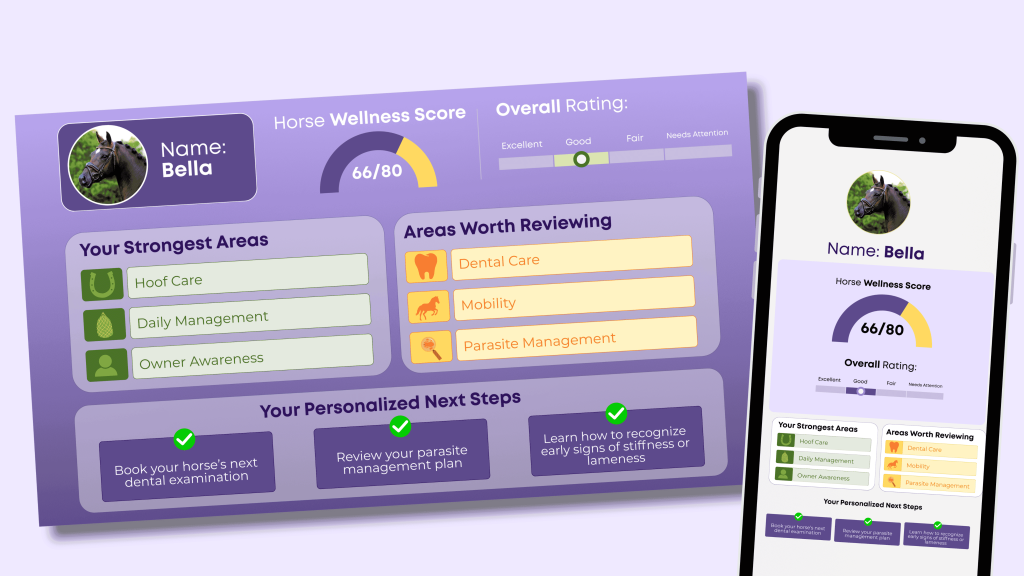
Once urgent care is arranged, use the free Horse Wellness Score quiz to review everyday care. It cannot diagnose foot pain.
If you want to go further, Horse Health HQ membership includes a lesson on hoof heat, digital pulse and early lameness checks.
Frequently asked questions about hoof abscesses
Riding should wait until the foot is sound
Do not ride a horse with a painful or draining abscess. Return to work only when your vet says the foot has healed and the horse is sound.
Repeat abscesses deserve another check
Wet conditions, cracks, bruises, and past laminitis may raise risk. Repeated abscesses in one foot may need X-rays. Regular farrier care and dry footing help, but cannot prevent all cases.
A hoof abscess can cause leg swelling
An abscess can make the lower leg swell, especially above the hoof or near the heel. Call your vet about any swelling, since other injuries can look similar.
We use AI-assisted research and drafting to explain horse health topics in plain language. A licensed equine veterinarian reviews each article for clinical accuracy before publication. Sources are listed below.
Sources
- Disorders of the Foot in Horses, section “Sole Bruises and Abscesses” (MSD Veterinary Manual)
- Hoof Abscesses in Horses (MSD Veterinary Manual)
- Horse hoof abscesses (University of Minnesota Extension)
- Subsolar Abscess and Coffin Bone Osteomyelitis (American College of Veterinary Surgeons)
- How to manage equine hoof abscesses (WCVM Today, University of Saskatchewan)