

Few diagnoses worry horse owners more than laminitis.
This painful condition can develop quickly, but it does not always begin with a horse that is obviously or dramatically lame. The early signs of laminitis in horses may be subtle, such as shortening the stride, becoming reluctant to turn or appearing uncomfortable on firm ground.
Recognizing these changes matters. The sooner your veterinarian can assess your horse, identify the underlying cause, and begin treatment, the greater the opportunity to limit pain and reduce further damage. The American Association of Equine Practitioners (AAEP) also advises horse owners to treat suspected laminitis as a veterinary emergency and seek prompt professional assessment.
This guide explains what laminitis is, which horses are at greater risk, what warning signs to watch for and what you should do if you are concerned.
Suspected laminitis is a veterinary emergency. Contact your veterinarian immediately rather than waiting to see whether your horse improves.
What Is Laminitis?
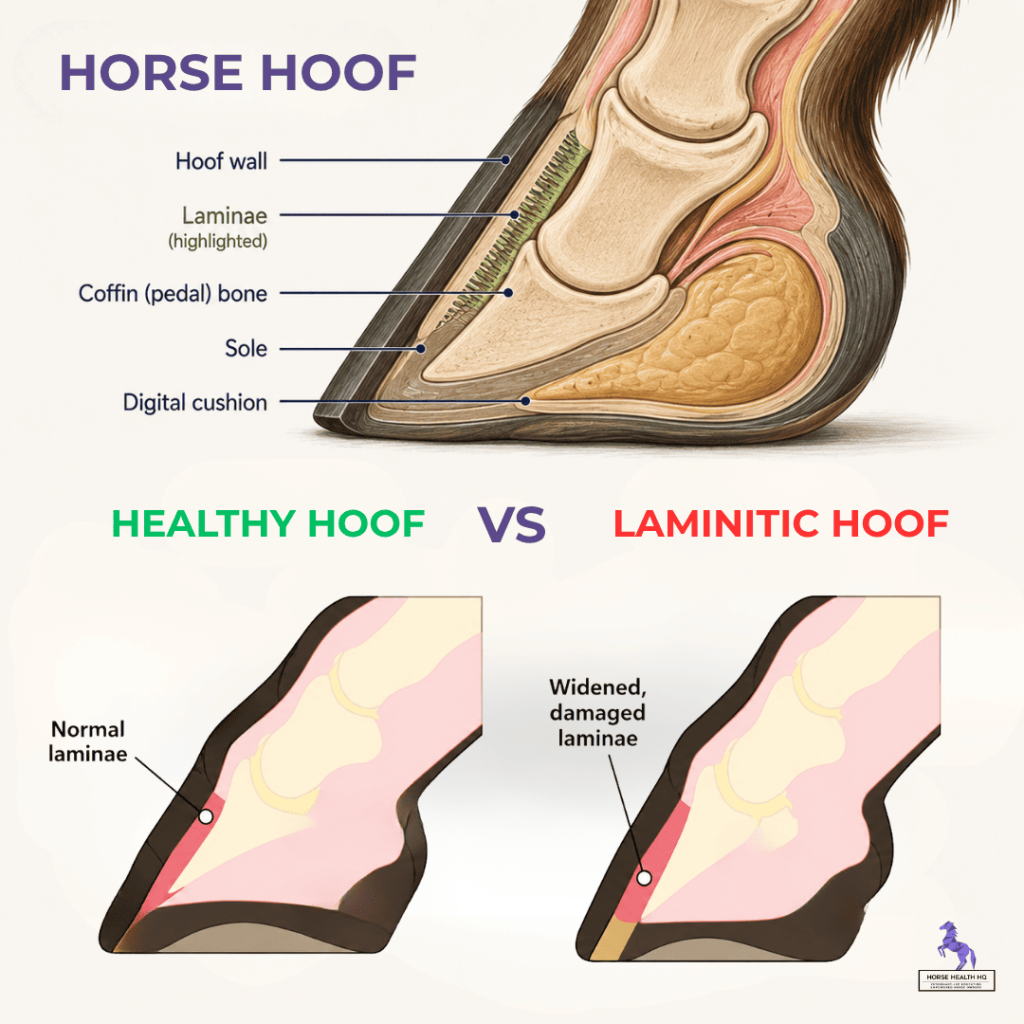
Inside each hoof is a layer of interlocking, leaf-like tissue called the lamellae, also known as the laminae.
These tissues help attach the hoof wall to the pedal bone, commonly called the coffin bone, inside the foot. This connection is essential because it helps suspend and support the horse’s weight within the hoof capsule.
Laminitis occurs when the lamellae become damaged and inflamed, and begin to lose their normal strength and function.
In more severe cases, this supporting connection can weaken enough for the pedal bone to rotate or sink within the hoof. These structural changes can cause lasting damage and may be visible on radiographs.
The term founder is often used interchangeably with laminitis. Some people use founder specifically to describe cases in which the pedal bone has moved, or in an acutely painful case, although terminology varies. What matters most is that laminitis can exist before major structural displacement has occurred.
Laminitis can affect one foot, several feet or all four. The front feet are most commonly affected, and are usually both affected together, but owners should not assume that discomfort in a single limb or the hindlimbs rules it out.
Why Laminitis Is an Emergency
The lamellae carry an enormous mechanical load. When they begin to fail, the weight of the horse and the forces exerted by the tendons can place additional stress on already compromised structures.
Delaying assessment may allow the disease to progress and can make pain more difficult to control very rapidly.
Early veterinary involvement also matters because laminitis is rarely just an isolated hoof problem. It may be associated with insulin dysregulation, Pituitary Pars Intermedia Dysfunction (aka PPID/Cushing’s Disease), severe systemic illness, dietary overload, or excessive weight-bearing on another limb.
Treating the feet without investigating the underlying trigger may leave the horse vulnerable to continued damage or another episode.
Early Signs of Laminitis in Horses
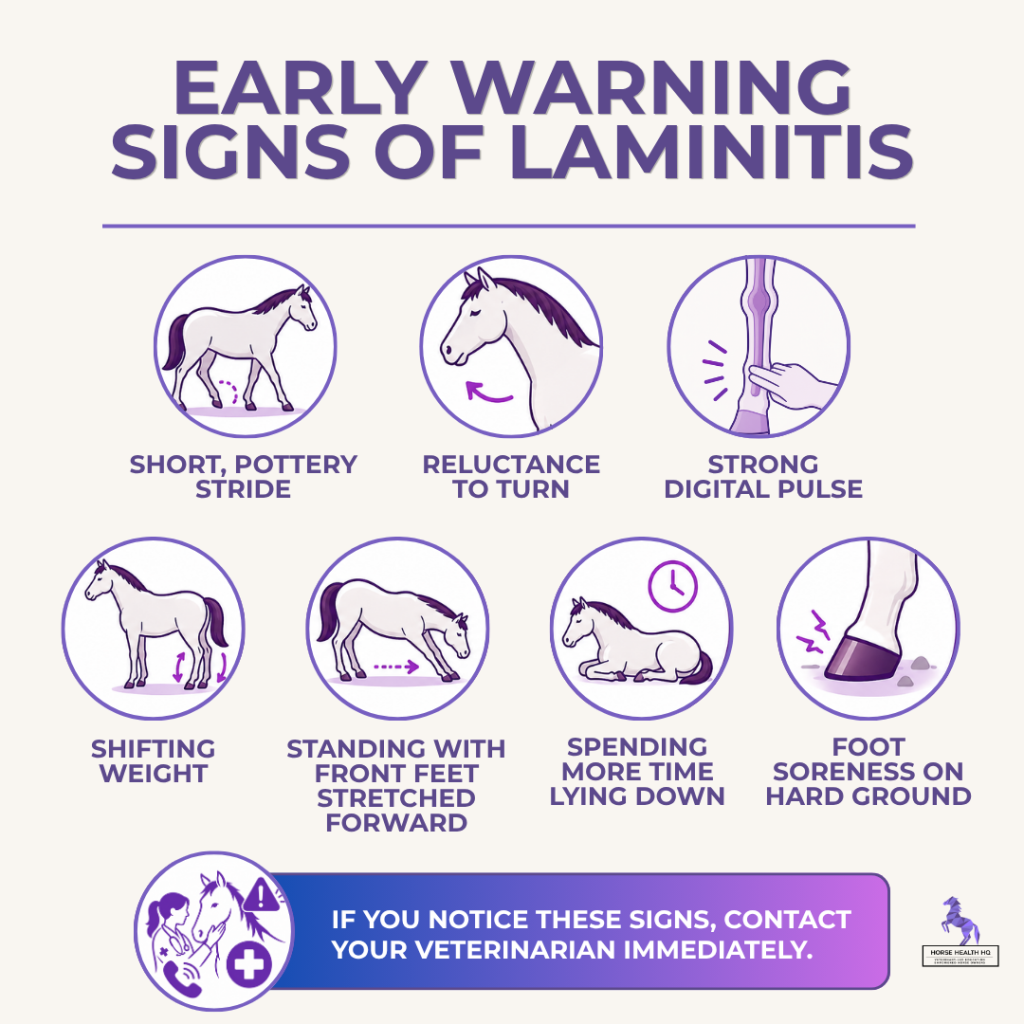
Not every horse adopts the classic stance of leaning backwards to remove weight from the front feet.
Some horses initially show subtle health signals that are easy to mistake for stiffness, bruised soles, arthritis or simple reluctance to move.
Changes in movement, posture and behaviour can all be early indicators of discomfort. Learning to recognise behavioural signs of pain may help you notice a problem before it becomes more obvious.
Possible early signs include:
- A shortened, stiff or “pottery” stride
- Reluctance to walk freely
- Hesitation or difficulty when turning
- Greater discomfort on firm, stony or uneven ground
- Shifting weight repeatedly from one foot to another
- Spending more time lying down
- Standing with the front feet placed farther forward than usual
- Reluctance to pick up one foot because doing so loads the opposite foot
- A stronger or more obvious digital pulse
- Unexplained foot soreness affecting more than one limb
- Changes in performance or willingness to move
Difficulty turning and a shortened or stilted walk are particularly important signs. Research has also shown that owners do not always recognise laminitis before veterinary diagnosis, sometimes mistaking it for an abscess, bruising, navicular disease or even colic.
Are Warm Hooves a Sign of Laminitis?
A horse with laminitis may have warmer feet, but hoof temperature naturally changes throughout the day and can be affected by exercise, weather, footing and circulation.
Warm feet alone do not diagnose laminitis.
They become more concerning when accompanied by other changes, such as a stronger digital pulse, shortened stride, reluctance to turn or obvious foot pain.
Call Your Veterinarian Immediately If Your Horse:
- Develops a new, stiff or pottery gait
- Becomes reluctant to turn or walk
- Appears painful on more than one foot
- Repeatedly shifts weight between the feet
- Has noticeably increased digital pulses together with foot soreness
- Has gained access to a feed bin or consumed a large quantity of grain
- Develops foot soreness during or after a serious illness
- Is bearing excessive weight on one limb because another limb is injured
- Has known insulin dysregulation, EMS or PPID and develops any unexplained foot discomfort
Do not wait for several signs to appear. A single significant change can justify an urgent call.
How to Check Your Horse’s Digital Pulse
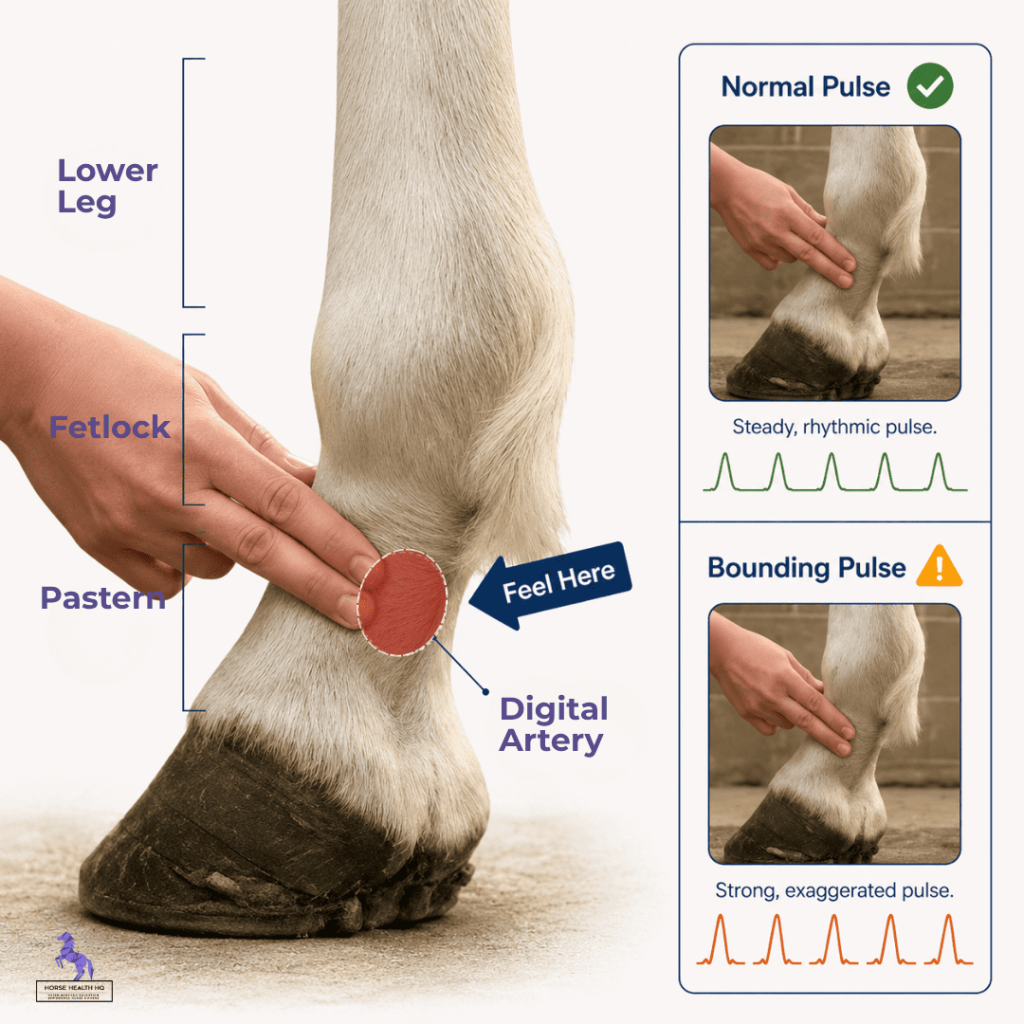
The digital arteries run down each side of the lower limb and supply blood to the foot. Their pulse can often be felt near the back or side of the fetlock, although the exact location can be difficult for an inexperienced owner to find.
In a comfortable horse at rest, the digital pulse may be faint or difficult to detect. A pulse that suddenly feels much stronger or “bounding” can indicate increased inflammation or blood flow within the foot.
However, a strong digital pulse does not confirm laminitis by itself. Hoof abscesses and other painful foot conditions can also increase it.
It is useful to:
- Learn where to feel the pulse when your horse is comfortable.
- Compare the same location on each limb.
- Notice whether the pulse is different from your horse’s usual baseline.
- Report any changes to your veterinarian.
Avoid repeatedly walking a sore horse simply to assess whether the gait has changed.
What Causes Laminitis in Horses?
Laminitis is not one single disease with one single cause. Cases are commonly grouped according to the process that triggered the lamellar damage.
Endocrine-Associated Laminitis
A large proportion of laminitis cases are associated with abnormal insulin regulation. This dysregulation can often be due to Equine Metabolic Syndrome, Pituitary Pars Intermedia Dysfunction (PPID), or a combination of the two.
Equine Metabolic Syndrome
Equine Metabolic Syndrome, or EMS, describes a collection of risk factors that increase a horse’s likelihood of developing endocrinopathic laminitis. The most important of these is insulin dysregulation.
An affected horse may produce an excessive or prolonged insulin response after eating feeds or pasture containing sugar and starch.
Horses with EMS may be overweight, but not every affected horse is obviously obese. Some have regional fat deposits, such as:
- A firm or enlarged crest
- Fat around the tail head
- Fat behind the shoulders
- Fat around the sheath or mammary region
Ponies and easy keepers are often considered at greater risk, but any horse can be affected.
PPID
Pituitary pars intermedia dysfunction, or PPID, is an endocrine condition seen most frequently in older horses and ponies. It was historically called equine Cushing’s disease.
PPID can increase laminitis risk, particularly when it is accompanied by insulin dysregulation. A horse does not need to have a long, curly coat before PPID should be considered.
Your veterinarian may recommend endocrine testing based on the horse’s age, history, physical appearance and clinical signs.
Diet and Pasture
Dietary triggers may include:
- Sudden access to grain or concentrate feed
- A large starch-rich meal
- Unrestricted access to a feed room or feed bin
- Pasture exposure in an insulin-dysregulated horse
- Sudden dietary changes
Pasture-associated laminitis is more complicated than simply blaming “lush grass.”
The individual horse’s insulin response is important, as are the grass species, weather, sunlight, temperature, frost, growth stage, rainfall and plant stress.
This means there is no single grazing time that is safe for every horse in every climate.
Laminitis Associated With Systemic Illness
Laminitis can develop following serious inflammatory or infectious conditions, including:
- Retained placenta after foaling
- Severe colitis
- Serious intestinal disease
- Pneumonia or another severe infection
- Systemic inflammatory response syndrome
- Endotoxemia (circulating infection in the bloodstream)
A horse being treated for a serious illness should be monitored carefully for foot discomfort or changes in digital pulses.
Supporting-Limb Laminitis
When one limb is severely injured, the opposite limb may carry far more weight than normal for a prolonged period.
This overloading can damage the lamellae in the supporting foot. Supporting-limb laminitis is a serious complication that requires close coordination between the veterinarian and farrier.
What to Do If You Suspect Laminitis
Your first step is to call your veterinarian immediately.
While waiting for instructions:
- Do not force your horse to walk. Keep movement to the minimum necessary for safety.
- Ask before moving the horse. Moving a painful horse over firm ground may increase discomfort. Follow your veterinarian’s advice about whether and how the horse should be relocated.
- Provide a deeply bedded area. Deep shavings, sand or another supportive surface may improve comfort and allow the horse to choose how it stands.
- Prevent unrestricted access to pasture and concentrates. Do not allow further access to grain or rich pasture while waiting for veterinary guidance.
- Keep fresh water available.
- Record relevant information. Record when the signs began and any recent changes in pasture, feed, exercise, medication, illness or body condition. Knowing what information your veterinarian needs can help them assess the urgency and prepare before they arrive.
- Check vital signs if it is safe to do so. Record temperature, heart rate and respiratory rate for your veterinarian.
- Discuss foot cooling with your veterinarian. Cryotherapy (applying ice to the hooves) can be useful in certain circumstances, but effective cooling requires an appropriate method and duration. Ask for specific instructions.
- Do not give medication unless directed. Pain relief may alter the examination, interact with other medication or be inappropriate for an individual horse.
What Not to Do
- Do not exercise the horse to “walk it off.”
- Do not repeatedly trot or turn the horse to assess it.
- Do not wait overnight to see whether it improves.
- Do not make a drastic dietary change without veterinary advice.
- Do not assume soaked hay is appropriate for every horse.
- Do not trim, shoe or manipulate the feet without veterinary and farriery guidance.
- Do not assume the horse is safe because it can still walk.
- Do not rely on social media advice instead of contacting your veterinarian.
How Veterinarians Diagnose Laminitis
Your veterinarian will consider the whole horse, not just the feet.
The assessment may include:
- Recent medical, dietary and pasture history
- Body condition and regional fat deposits
- Stance and willingness to move
- Turning and movement on different surfaces, when appropriate
- Digital pulse intensity
- Hoof-tester examination
- Radiographs of the feet
- Blood tests for insulin dysregulation or PPID
- Evaluation for infection, gastrointestinal disease or another systemic trigger
Radiographs help assess the position of the pedal bone and provide information that can guide hoof support and farriery. Baseline images may also be compared with later radiographs.
Not every horse requires every test. The investigation will depend on the suspected cause, severity and previous medical history.
Treatment and Hoof Support
There is no single treatment plan suitable for every case.
Veterinary management may involve:
- Pain relief and anti-inflammatory medication
- Treatment of the underlying disease or trigger
- Dietary management
- Cryotherapy when clinically appropriate
- Mechanical support for the foot
- Restricted movement
- Corrective trimming or shoeing
- Repeat radiographs
- Testing and treatment for endocrine disease
- Ongoing collaboration between the veterinarian, farrier and owner
Hoof support should be selected for the individual horse. The location of pain, degree of structural change and hoof conformation all influence the most appropriate approach.
Can a Horse Recover From Laminitis?
Some horses recover well and return to their previous level of activity. Others require ongoing management, have recurrent episodes or develop permanent structural changes.
Prognosis depends on:
- The underlying cause
- How quickly treatment begins
- The severity and duration of the episode
- Whether the pedal bone has moved
- The horse’s response to pain management and hoof support
- Whether insulin dysregulation or another underlying condition can be controlled
- Whether complications develop
Recovery does not follow a fixed timetable.
A horse should not return to normal exercise simply because it appears more comfortable. Decisions about movement, turnout and ridden work should be based on veterinary reassessment and, where needed, follow-up imaging.
A previous laminitis episode can increase the risk of future episodes, making long-term weight management, appropriate nutrition and regular veterinary monitoring especially important. World Horse Welfare provides additional owner guidance on managing horses that are at increased risk of laminitis.
How to Prevent Laminitis
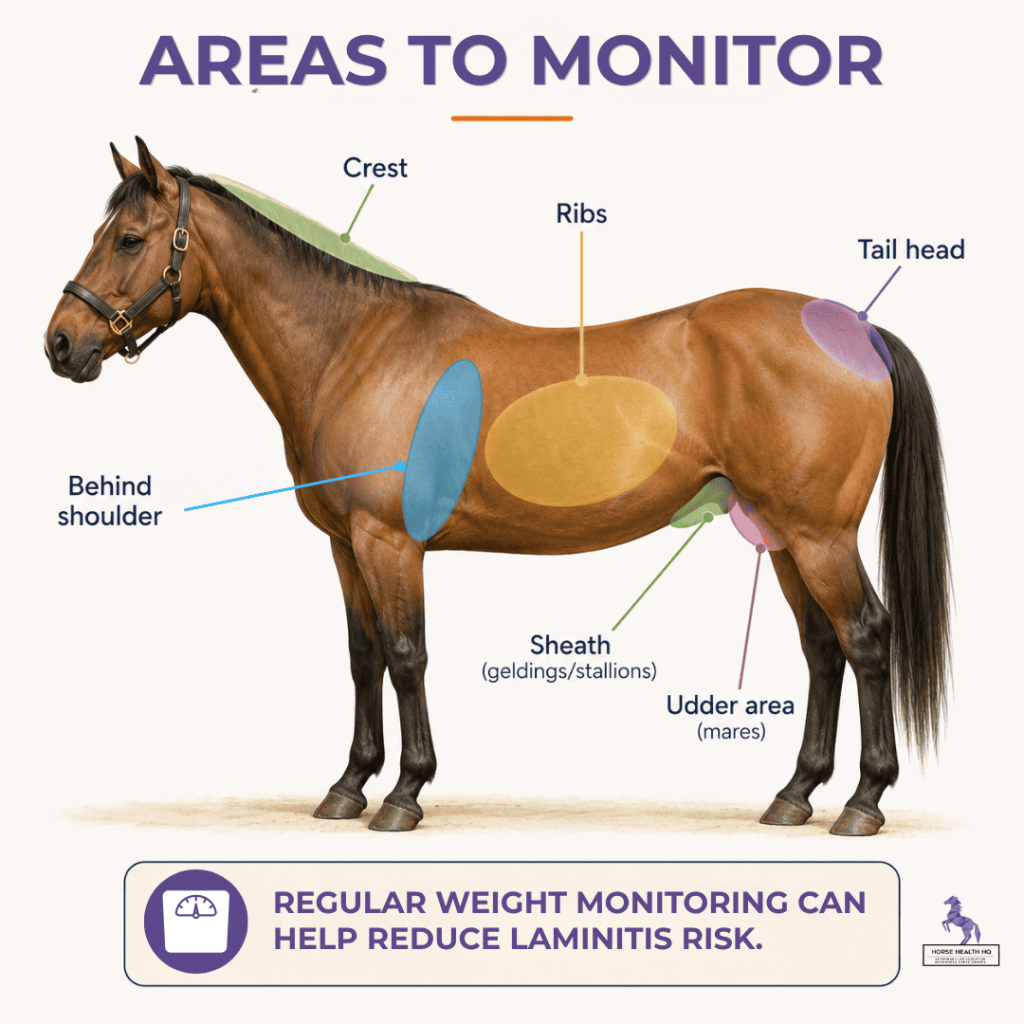
Horse body condition diagram highlighting common fat storage areas associated with increased laminitis risk.
Not every case can be prevented, but several practical steps can reduce risk.
Monitor Body Condition
Learn to assess more than total body weight.
Look for changes in:
- The neck crest
- Fat behind the shoulder
- Ribs
- Tail head
- Sheath or mammary region
A weight tape, photographs, and regular body-condition scoring can help identify gradual changes that are otherwise easy to miss.
Obesity is associated with a substantially increased risk of laminitis, although lean horses can also be affected.
Investigate Endocrine Risk
Speak to your veterinarian about testing when a horse:
- Has experienced laminitis previously
- Is an easy keeper
- Has a large or firm crest
- Is persistently overweight
- Is an older horse or pony
- Shows signs consistent with PPID
- Becomes foot sore without a clear explanation
Manage Feed and Pasture Carefully
- Introduce feed changes gradually.
- Store grain and concentrates securely.
- Focus on maintaining a balanced, forage-based diet that is appropriate for your horse’s weight, workload and metabolic risk.
- Work with your veterinarian or qualified equine nutrition professional.
- Use hay analysis where practical.
- Discuss whether soaking hay is necessary and appropriate.
- Create a personalized grazing plan for high-risk horses.
- Do not assume a grazing muzzle makes unrestricted turnout safe.
Maintain Regular Hoof Care
Regular hoof care helps maintain balance and allows the farrier to notice changes such as stretched white lines, divergent hoof rings or altered hoof growth.
The correct trimming or shoeing interval varies between horses and may change during recovery.
Know What Is Normal for Your Horse
Become familiar with your horse’s:
- Usual stride
- Willingness to turn
- Digital pulses
- Body condition
- Hoof shape
- Behaviour on firm ground
Knowing the normal baseline makes subtle changes easier to recognise. Laminitis prevention works best when weight checks, hoof care, dental care, vaccinations, blood testing and nutritional reviews are planned rather than handled only when a problem appears. A clear annual horse health plan can help you stay ahead of changes in your horse’s condition.
Managing Laminitis Risk Through the Seasons
Laminitis is not only a spring problem.
Pasture risk changes according to local conditions and the individual horse. Factors include:
- Sunlight
- Day and night temperatures
- Frost
- Rainfall
- Drought
- Plant species
- Stage of growth
- Recent mowing or grazing
- Plant stress
- The horse’s insulin response
A cold, bright day after frost may present a different risk from a warm, cloudy day. Grass stressed by drought or cold can also behave differently from actively growing pasture.
Rather than relying on one universal rule about turnout times, owners of high-risk horses should develop a grazing plan with their veterinarian or equine nutrition professional.
That plan may include restricted turnout, a track system, a grazing muzzle, alternative forage, dry-lot turnout or temporary removal from pasture. The right approach depends on the horse, environment and facilities available.
The Emotional Impact of Laminitis
Laminitis can leave owners feeling frightened, overwhelmed or guilty.
It is natural to look back and wonder whether you should have noticed something sooner. However, some horses develop laminitis despite conscientious care, and the earliest signs can be difficult to recognise.
Focus on what you can do next:
- Call your veterinarian promptly.
- Follow the treatment plan consistently.
- Investigate the underlying cause.
- Coordinate veterinary and farriery care.
- Monitor your horse carefully.
- Ask questions when instructions are unclear.
Seeking help quickly is not an admission that you have failed. It is one of the most important things you can do for your horse.
Frequently Asked Questions About Laminitis
Can a horse get laminitis without being overweight?
Yes. Obesity and insulin dysregulation are major risk factors, but lean horses can develop laminitis due to PPID, systemic illness, grain overload or excessive weight-bearing on another limb.
Can laminitis affect only one foot?
Yes. It may affect one, two or all four feet. Supporting-limb laminitis, for example, may initially affect the limb carrying additional weight because another limb is injured.
Are warm hooves always a sign of laminitis?
No. Hoof temperature varies normally. Warmth becomes more concerning when accompanied by pain, a strong digital pulse, altered movement or reluctance to turn.
Can grass cause laminitis?
Pasture can trigger laminitis in susceptible horses, particularly those with insulin dysregulation. The risk depends on the horse as well as grass, weather and environmental conditions.
Should a horse with suspected laminitis be walked?
No. Do not force a painful horse to walk or exercise it to “improve circulation.” Contact your veterinarian and minimize unnecessary movement.
How long does recovery take?
There is no standard recovery period. Mild cases may improve relatively quickly, while severe cases can require months of treatment and rehabilitation. Return to exercise should be guided by the veterinarian.
Can a horse be ridden again after laminitis?
Some horses return to ridden work, but this depends on the cause, severity, hoof damage and response to treatment. Veterinary reassessment should determine when exercise is safe.
What is the difference between laminitis and founder?
Laminitis refers to disease or damage affecting the lamellae. “Founder” is commonly used to describe laminitis, particularly when the pedal bone has rotated or sunk, although people use the terms interchangeably.
Recognise the Signs and Act Early
Laminitis can begin with subtle changes, but it should never be treated as a minor foot problem.
Remember:
- Learn your horse’s normal movement and digital pulses.
- Take unexplained foot soreness seriously.
- Contact your veterinarian immediately if you suspect laminitis.
- Do not force the horse to move.
- Investigate the underlying cause.
- Continue monitoring after the immediate episode has passed.
Early recognition cannot guarantee the outcome, but it gives your horse the best opportunity to receive appropriate care before more serious damage develops.
This article provides general educational information and does not replace advice from your veterinarian. Contact your veterinary practice immediately if you believe your horse may have laminitis.
Protect Your Horse With Veterinarian-Led Advice
Recognising small changes early can make an enormous difference to your horse’s welfare.
Join the Horse Health HQ community to receive free weekly, veterinarian-led guidance on recognising pain, responding to emergencies and making more confident decisions about your horse’s care.