

None of us like to think about disasters.
It’s much easier to focus on the things we can see every day. Feeding our horses. Booking the farrier. Organising vaccinations. Making sure they have fresh water, good hay and a comfortable place to rest.
But every now and then, we’re reminded that emergencies don’t come with a warning.
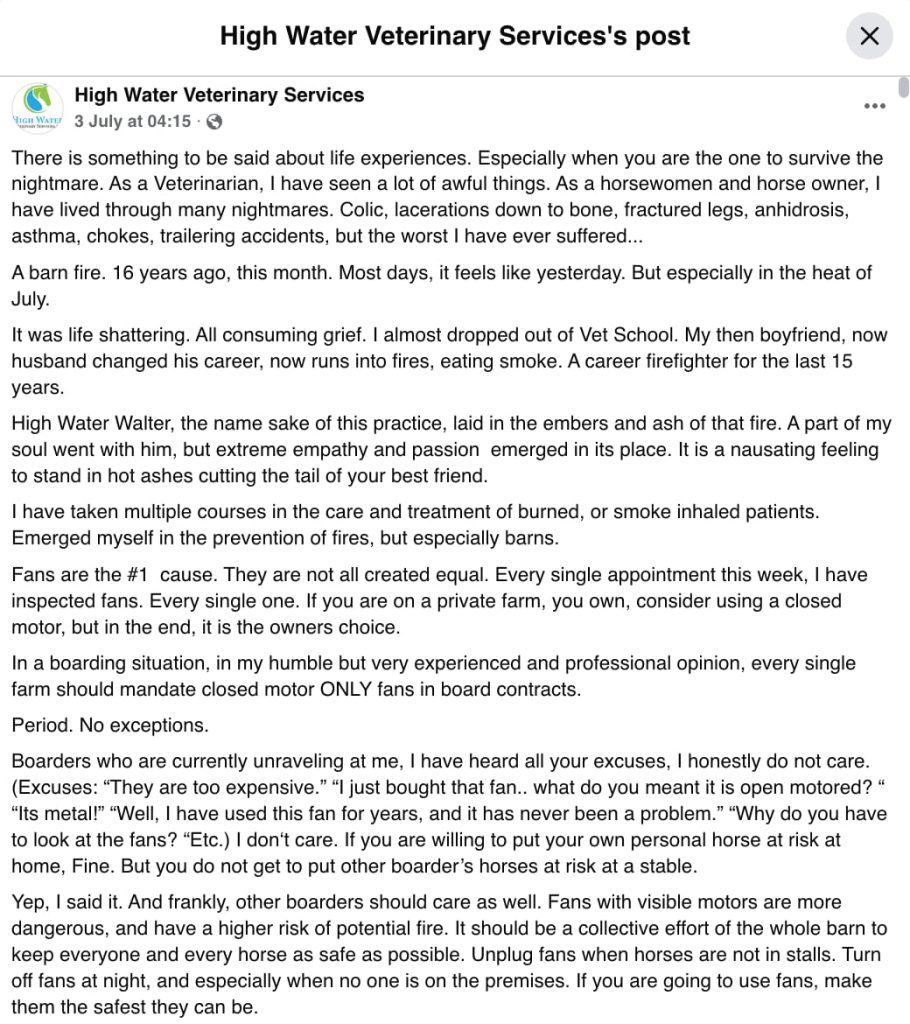
Recently, I read a post from an equine veterinarian who shared a deeply personal story. Sixteen years ago, she lost her beloved horse in a barn fire. She wrote that, even today, July brings back memories that feel as vivid as ever. That heartbreaking experience has driven her to educate other horse owners in the hope that another family never has to endure the same loss.
Her story made me stop and think.
Not just about barn fires, but about how prepared any of us really are when something unexpected happens. Preparing for emergencies isn’t something to think about after disaster strikes. It’s something every horse owner should plan for in advance.
According to fire safety experts, a small barn fire can engulf an entire stable in as little as five to seven minutes. The Animal Welfare Institute also reports that more than 900 horses have died in barn fires across the United States since 2013. More recently, a tragic barn fire in New York claimed the lives of 17 horses, prompting new requirements for smoke, fire and heat alarms in harness racing barns.
Those statistics aren’t shared to create fear.
They’re a reminder that when an emergency happens, there is very little time to think. The decisions you make beforehand are often the ones that matter most. The same is true whether you’re dealing with a barn fire, a horse with colic, choke or another life-threatening emergency.
Take a Fresh Look Around Your Barn
Walk into your barn today and look at it with fresh eyes.
Not as someone feeding horses.
As someone looking for potential hazards.
Ask yourself:
- Are my fans designed for agricultural use, or are they ordinary household fans working in a dusty environment?
- Are extension cords being used as a permanent solution instead of proper electrical outlets?
- Has dust or cobwebs built up around fans, lights or electrical equipment?
- Are my smoke alarms working?
- Do I know exactly where every fire extinguisher is located?
None of these jobs take long, but together they can make your barn a much safer place.
Stop for 30 Seconds
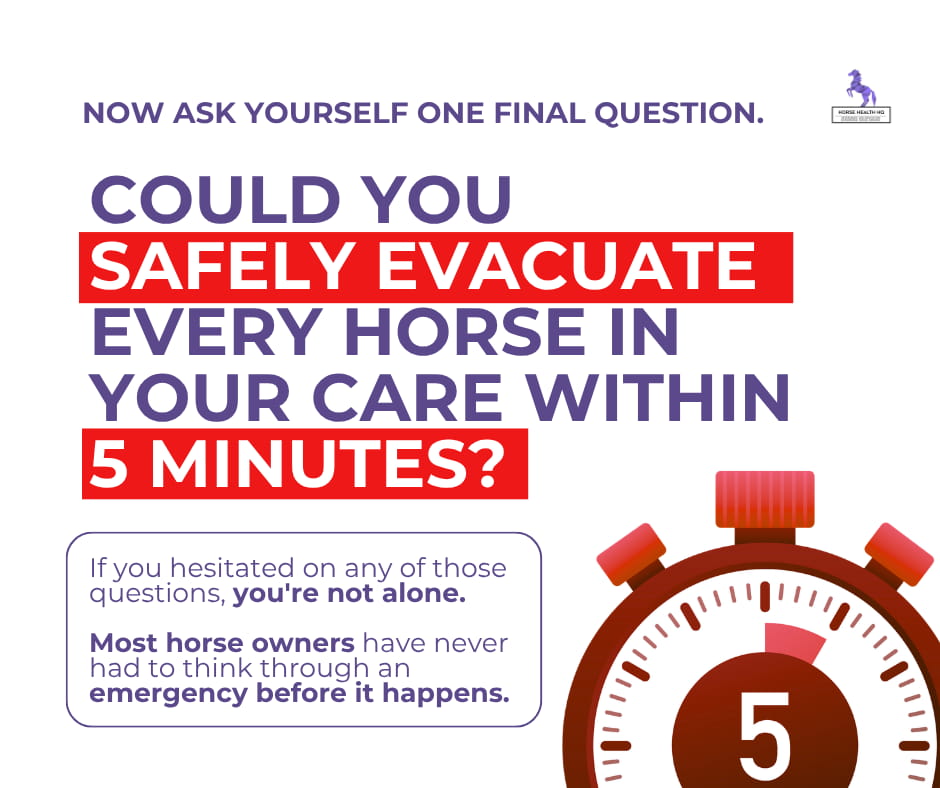
Imagine there’s smoke coming from your barn right now.
Do you know exactly:
- Who would call emergency services?
- Which horses you would move first?
- Where you would take them?
- Who could help if you weren’t home?
- If your horse is boarded, do you know your stable’s emergency plan?
- If you had to leave immediately, could you catch and load every horse without searching for halters, paperwork or keys?
Now ask yourself one final question.
Could you safely evacuate every horse in your care within five minutes?
If you hesitated on any of those questions, you’re not alone.
Most horse owners have never had to think through an emergency before it happens.
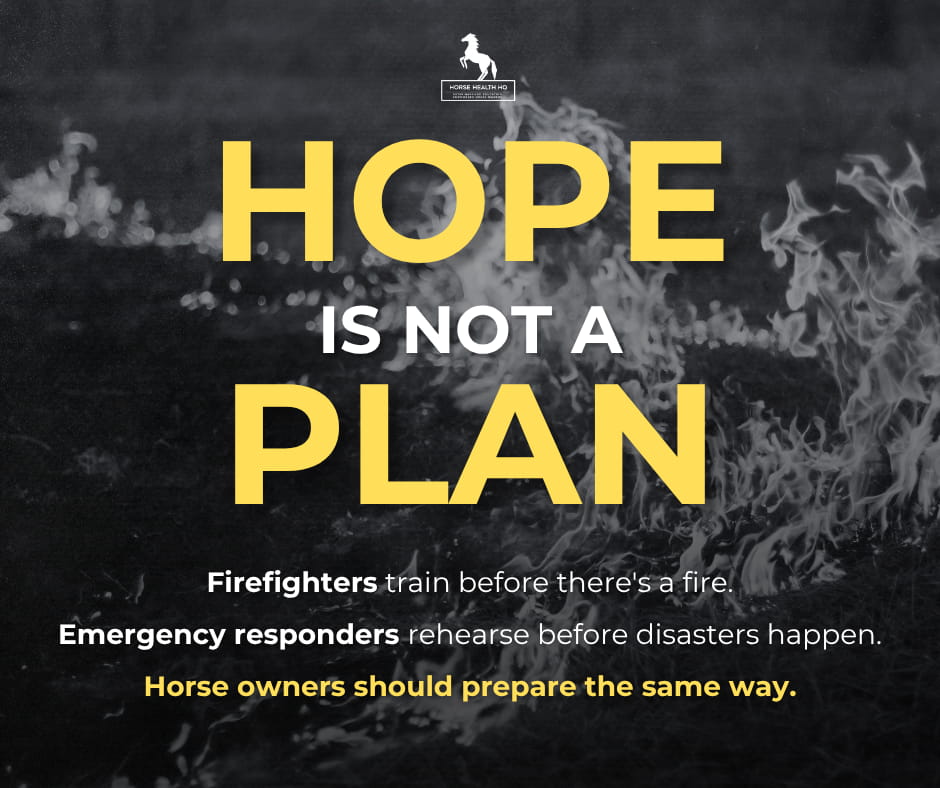
Hope Is Not a Plan
Whether it’s a barn fire, flood, wildfire, severe storm or another unexpected emergency, the decisions you make before disaster strikes will almost always be your best ones.
Firefighters train before there’s a fire.
Emergency responders rehearse before disasters happen.
Horse owners should prepare the same way.
Having an emergency plan isn’t about expecting the worst. It should simply become part of your horse’s annual health and management planning, just like vaccinations, dental care and parasite control.
It’s about giving yourself, your family and your horses the best possible chance if something unexpected happens.
Even something as simple as deciding where your horses would go, keeping halters and lead ropes together, making sure emergency vehicles can easily access your property, and ensuring each horse can be quickly identified if they become separated can save valuable minutes when every second counts.
These are the kinds of details most of us don’t think about until an emergency is already unfolding.
I hope none of us ever need to put an emergency plan into action.
But if that day comes, you’ll never regret having one.
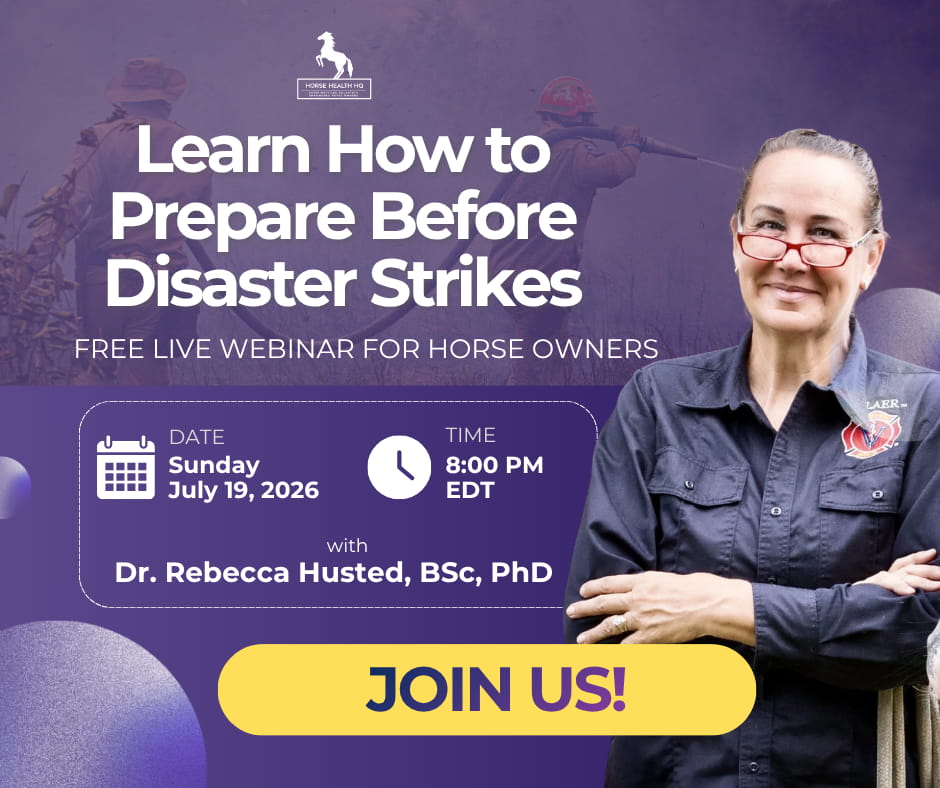
Learn How to Prepare Before Disaster Strikes
If reading this article has made you realise you don’t yet have an emergency plan, we’d love to invite you to our upcoming free live training with internationally recognised large animal emergency rescue expert Dr. Rebecca Husted BSc PhD.
During this practical webinar, you’ll learn:
- How to prepare your horses for floods, wildfires and other natural disasters.
- The essential steps every horse owner should take before an emergency occurs.
- How to build an evacuation plan your family can actually follow.
- Common mistakes horse owners make during emergencies, and how to avoid them.
- Practical advice that could make all the difference when every minute counts.
Because when it comes to protecting the horses we love, the best time to prepare is always before disaster strikes.