

If you’ve ever looked inside your horse’s mouth and noticed a small tooth sitting just in front of the cheek teeth, you’re not alone in wondering whether it’s a problem.
Horse owners frequently ask questions like:
- Should wolf teeth be removed?
- Why does my horse have canine teeth?
- Can these teeth affect the bit?
- Are unusual teeth causing my horse’s behaviour under saddle?
The answer depends on the individual horse.
Many horses live their entire lives with wolf teeth or canine teeth without experiencing discomfort. Others develop pain, resistance to the bit, or changes in behaviour because of where these teeth are positioned.
Understanding which dental variations are normal, which deserve monitoring, and which require treatment can help keep your horse comfortable while preventing unnecessary procedures.
In this article, we’ll explain everything horse owners should know about wolf teeth, canine teeth and unusual dental anatomy, when they matter, and when they don’t.
Quick Summary of this Article
- Wolf teeth are small vestigial teeth found in many horses, meaning they are a ‘leftover’ from evolution that are usually not important in the horse’s current function.
- Most do not cause problems.
- Some interfere with the bit and should be removed – especially if they are enlarged, misshapen, or displaced.
- Canine teeth are different and usually only need monitoring.
- A veterinary dental examination is the best way to decide whether treatment is necessary.
Regular dental examinations are one of the simplest ways to keep your horse comfortable, performing well, and free from preventable dental problems
What Are Wolf Teeth?
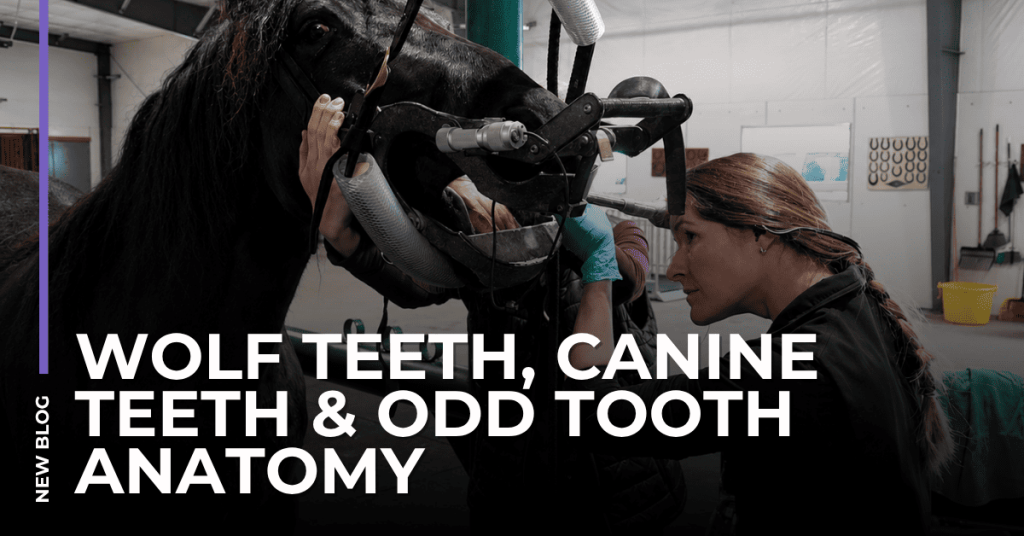
Wolf teeth are the first premolar teeth (PM1) and are considered vestigial, meaning they no longer have a significant function in the modern horse.
Unlike the large cheek teeth that grind forage, wolf teeth play no meaningful role any activity in the horse.
Most horses develop one or two wolf teeth in the upper jaw between 6 months and 18 months of age, although eruption can occur as late as three years.
Some horses never develop wolf teeth, while others may have:
- One wolf tooth
- Two wolf teeth
- Lower wolf teeth (rare)
- Blind wolf teeth that remain beneath the gum
- Extra wolf teeth
This variation is completely normal.
| Feature | Wolf Teeth |
|---|---|
| Purpose | No significant function |
| Age they appear | 6 months to 3 years |
| Most common location | Upper jaw |
| Lower jaw | Rare |
| Do they all need removal? | No |
| Can they affect the bit? | Sometimes |
Why Are They There?
Modern horses evolved from much smaller ancestors that browsed rather than grazed. Those early horses possessed additional premolar teeth that gradually became unnecessary as grazing habits changed and jaw anatomy evolved.
Wolf teeth are the small remnants of those ancestral premolars. Today, they have little or no functional purpose, but they remain common in domestic horses.
Where Are They Found?
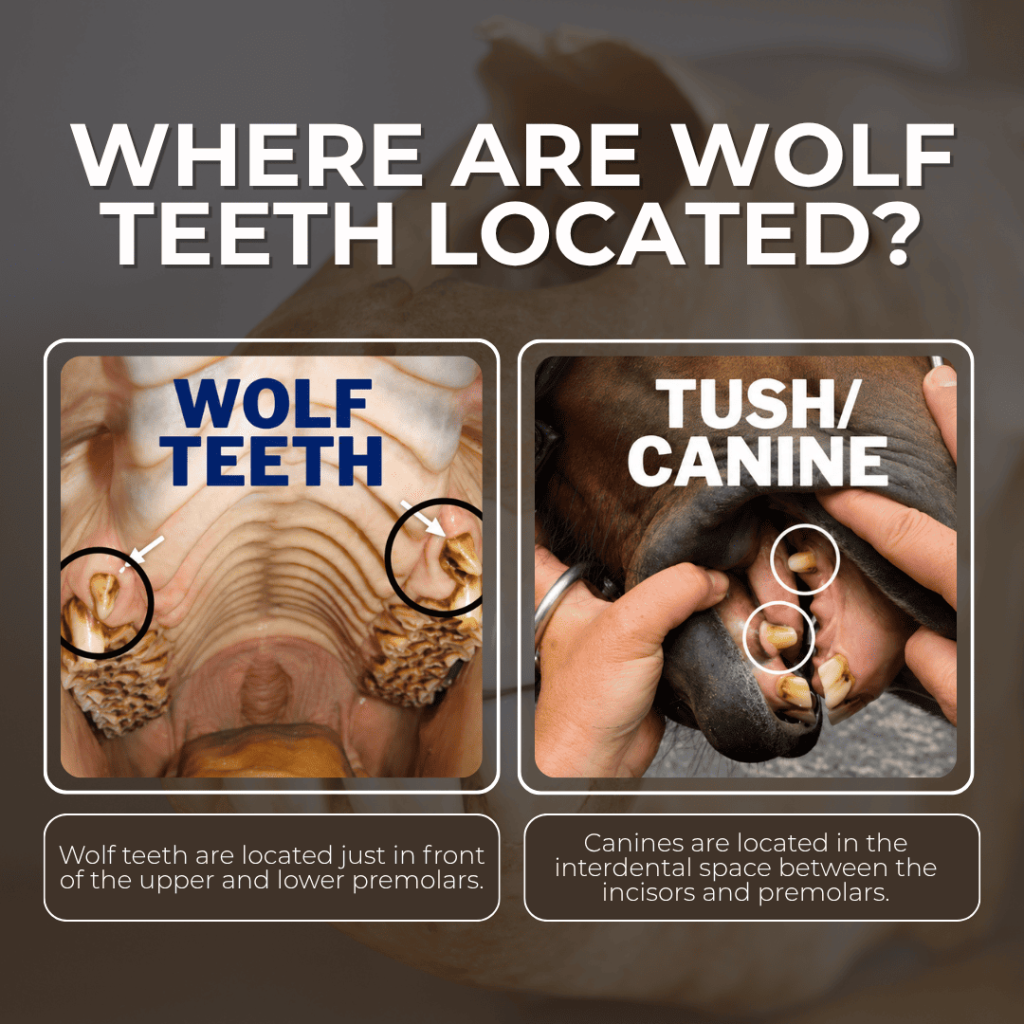
- Most commonly in the upper jaw
- Occasionally in the lower jaw
- Sometimes only on one side
- Sometimes not present at all
Lower wolf teeth are relatively rare but more likely to interfere with the bit if present.
Do Wolf Teeth Always Cause Problems?
No. Many wolf teeth are shed along with the second premolar (cap) when the horse loses their deciduous (baby) teeth and their permanent teeth erupt.
If that doesn’t happen, most horses that maintain their wolf teeth carry them their entire lives without pain or behavioural issues. However, the position, size, and angle determine whether they will cause trouble.
Signs Wolf Teeth May Be a Problem
- Head tossing when bridled
- Reluctance to take contact
- Sensitivity to rein pressure
- Resistance when turning
- Opening the mouth or grabbing the bit
- Sudden behaviour changes in young horses starting work
Because the bit sits directly over the wolf teeth region, sensitive or abnormally positioned wolf teeth can cause discomfort with every stride.
Case example:
A four-year-old gelding who was examined had become explosive when asked to trot under saddle. The trainer suspected a back issue. Instead, he had two large, angled wolf teeth pressing into the bit. Once removed and healed, he became calm and willing again.
Do All Wolf Teeth Need to Be Removed?
This is one of the most common questions veterinarians hear. The short answer is no. Many wolf teeth never cause discomfort and may never require treatment.
Veterinarians generally recommend removal only when the tooth is likely to interfere with the bit or cause pain. Removal may be advised when:
- the horse is beginning ridden work
- the wolf tooth is loose
- it points backwards toward the bit
- it has become fractured
- lower wolf teeth are present
- blind wolf teeth are causing discomfort
- the horse shows signs of bit resistance
Removing healthy wolf teeth “just because they exist” is not always necessary. The decision should be based on examination rather than routine.
Expert Insight
“Every horse is an individual. We don’t remove wolf teeth simply because they’re present. We remove them when they are likely to affect comfort or bit function.”
Dr Olivia James BVSc (Hons) MANZCVS (Eq Dentistry) CMAVA DICEVO DAVDC (Equine)
When Removal Is Recommended
- Before backing or early training DEPENDING on location (upper or lower)
- When the teeth are large or positioned toward the bit
- When the horse shows bit resistance
- When the teeth are loose or fractured
Removal is a simple, quick procedure performed under sedation, followed by a short healing period.
Blind wolf teeth never erupt through the gum but remain buried beneath the soft tissue.
Although invisible, they can still become painful because pressure from the bit compresses the gum over the hidden tooth.
These horses often present with:
- unexplained resistance
- tossing the head
- refusing contact
- difficulty turning one direction
- sudden behaviour changes after starting ridden work
Because blind wolf teeth cannot be seen during a casual inspection, a complete oral examination performed by a veterinarian is important whenever bitting problems develop. If the veterinarian suspects a blind wolf tooth to be present, they may suggest radiographs to confirm the diagnosis.
Can Wolf Teeth Cause Behaviour Problems?
Sometimes. Pain inside the mouth often appears as a training problem rather than a dental problem.
Owners may notice:
- refusing to turn
- leaning heavily on one rein
- opening the mouth
- crossing the jaw
- grabbing the bit
- head shaking
- bucking when contact is taken
- reluctance to move forward
Of course, these signs can also result from saddle fit, musculoskeletal pain, rider balance or training issues. A veterinary examination helps determine whether the mouth is contributing to the problem.
Canine Teeth: What Owners Should Know
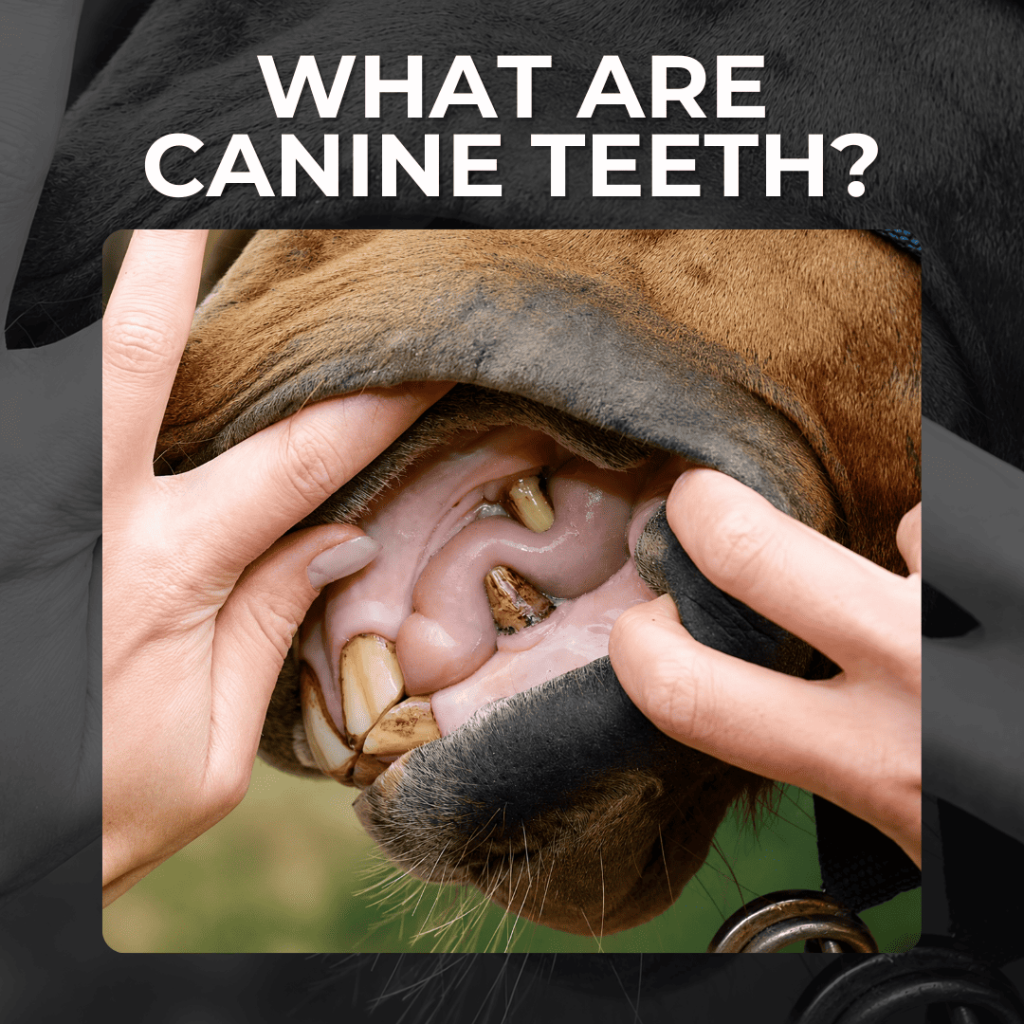
Canine teeth are much more common in males because their development is influenced by hormones.
Nearly all stallions and geldings have canine teeth, while only approximately 25% of mares will have them.
Although they resemble the canine teeth of carnivores, horses do not use them for eating. Historically they were used during fighting between stallions. They usually erupt between 4 to 5 years of age. Sometimes they are mistaken for wolf teeth, but are typically much larger and erupt midway between the incisors and cheek teeth. Wolf teeth lay immediately adjacent (usually touching) the first cheek tooth (Premolar 2).
Do Horses Use Canines for Chewing?
No. These teeth are not involved in grinding food. They are believed to be remnants of ancient fighting behaviour.
Do Canine Teeth Cause Problems?
Not often, however they can:
- Become sharp and cut lips or tongue
- Interfere with bit pressure
- Accumulate tartar
- Become sensitive if fractured
- Cause discomfort during bitting or dental work
Do Canines Need Routine Care?
Yes, but their care is very different than the care of the cheek teeth that we call ‘floating’. The cheek teeth are intended for grinding, and essentially ‘self-brush’ with all of the stemmy hay that rubs against them while the horse eats. Because canines aren’t used to chew, they collect tartar and can irritate the gums if not monitored.
Regular cleaning prevents tartar build up and periodontal disease at the gumline. Canines should almost NEVER be reduced as their pulp horns lay very close to the surface and any reduction risks pulp exposure and tooth death. Only a qualified veterinarian should perform canine reduction due to broken/sharp tooth edges or similar. If a canine is causing significant discomfort during work, the best option at that point is extraction of the offending tooth.
Extra Teeth, Missing Teeth, and Odd Anatomy
Not all horses read the rulebook. Odd dental variations are more common than owners expect.
Supernumerary Teeth (Extra Teeth)
Some horses grow extra molars or incisors. If these crowd the mouth or interfere with chewing, they may require intervention.
Missing Teeth
Miniature horses and ponies often struggle with overcrowded mouths and missing teeth. Missing teeth can cause:
- Overgrowth of the opposing tooth
- Uneven wear
- Sharp edges
- Chewing inefficiency
Blind Wolf Teeth
These are wolf teeth that remain under the gum surface. They can still cause bitting discomfort even though they aren’t visible. Horses with blind wolf teeth often show dramatic improvement once they are removed.
Odd Angles and Rotations
Young horses may grow teeth at unusual angles as their jaws develop. Many correct themselves, but others require careful monitoring.
How Wolf Teeth and Canine Teeth Can Affect the Bit
One of the most common questions horse owners ask is, “If my horse has wolf teeth, why would they only become a problem when ridden?” The answer lies in where the bit sits inside the horse’s mouth.
When a horse is wearing a bridle, the bit rests in the gap between the front incisors and the cheek teeth, an area known as the bars of the mouth. Although the bit doesn’t normally sit directly on the wolf teeth, rein pressure, movement of the bit, and the surrounding soft tissues can cause the bit to press against or near them, particularly if the wolf teeth are large, angled, loose, or positioned close to the bit.
This is why many horses with wolf teeth remain perfectly comfortable, while others develop signs of discomfort. A small wolf tooth positioned high in the gum may never interfere with the bit or cause pain. In contrast, a larger tooth that sits lower, points backwards, or is loose can become sensitive every time the horse takes contact with the reins.
Signs your horse may be experiencing bit-related discomfort include:
- Head tossing or shaking
- Opening the mouth
- Grabbing or chewing the bit
- Leaning heavily on one rein
- Crossing the jaw
- Difficulty maintaining a consistent contact
- Reluctance to turn in one direction
- Sudden resistance after previously going well
Lower wolf teeth deserve particular attention because they are much less common and are often located closer to where the bit applies pressure. Even relatively small lower wolf teeth may interfere with the bit and are therefore more likely to be recommended for removal than upper wolf teeth.
Canine teeth can also contribute to discomfort, although this is significantly less common. If they become excessively long, sharp, fractured, or develop significant tartar buildup, they may irritate the lips, tongue, or surrounding soft tissues, especially in horses ridden regularly with a bit.
It’s important to remember that not every horse showing resistance under saddle has a dental problem. Behaviour such as opening the mouth, tossing the head, leaning on the reins, crossing the jaw, or resisting contact can also result from saddle fit, musculoskeletal pain, rider balance, training issues, or problems elsewhere in the body.
However, because discomfort inside the mouth is often difficult to recognise, a thorough veterinary dental examination should always be part of the investigation when these behaviours develop.
The goal is not to remove every wolf tooth or canine tooth, but to determine whether that particular tooth is affecting the horse’s comfort, welfare, or performance. Every horse is an individual, and treatment decisions should always be based on a careful oral examination rather than a routine approach.
When These Teeth Don’t Matter
Not every unusual tooth requires removal or intervention.
Wolf teeth may be harmless when:
- They are small
- They sit high in the gum
- The horse is not bitted
- They don’t interfere with soft tissues
- The horse is completely unbothered by them
Canine teeth usually don’t need removal unless fractured.
Extra or missing teeth may be manageable with good regular dentistry.
The goal is always the same: comfort, safety, and long-term welfare – not aggressive intervention.

What Your Veterinarian Looks For
If you’re not sure what happens during a dental visit, read our guide on what to expect during a routine equine dental examination.
Your vet will assess:
- Wolf tooth size and position
- Presence of blind wolf teeth
- Canine length, sharpness, and tartar
- Effects on bit contact
- Soft tissue health
- Risks of interference with cheek teeth
- Whether odd teeth are causing asymmetry
Many horses become noticeably more comfortable once painful dental conditions are treated. Improvements may include quieter bridling, greater acceptance of the bit, and a softer contact under saddle, although every horse responds differently.
Supporting Your Horse’s Comfort
You can help your horse by:
- Scheduling regular dental exams (at least once per year; your vet can advise if more frequent examination is necessary)
- Observing changes in ridden behaviour
- Checking for tartar buildup on canines
- Looking for head sensitivity during bridling
- Introducing the bit slowly in young horses
Small, proactive steps prevent long-term discomfort.
Frequently Asked Questions
Should every horse have wolf teeth removed?
No. Removal is only recommended when the teeth are likely to cause discomfort or interfere with the bit.
At what age do wolf teeth appear?
Most erupt between 6 months and 18 months of age, although some appear later.
Can mares have canine teeth?
Yes. Around 25% of mares develop canine teeth.
Are wolf teeth painful?
Many are not. Pain depends on the tooth’s size, position, stability and whether it contacts the bit.
Can horses eat normally with or without wolf teeth?
Yes. Wolf teeth play almost no role in chewing.
How often should my horse have a dental examination?
Most adult horses benefit from a veterinary dental examination every 6 to 12 months, although young horses, seniors and horses with dental disease may require more frequent assessments.
Can wolf teeth grow back?
No. Once removed correctly they do not grow back.
Can older horses still have wolf teeth?
Yes. Some horses keep them for life without any problems.
Does removing wolf teeth hurt?
The procedure is performed under sedation and local anaesthesia by a veterinarian. Most horses recover quickly.
Can wolf teeth affect performance?
Sometimes. If they interfere with the bit they may contribute to discomfort during ridden work.
Today’s Takeaway
The good news is that most wolf teeth never become a serious problem. But because every horse’s mouth is different, regular dental examinations are the best way to identify issues before they affect comfort or performance.
Whether your horse has wolf teeth, canine teeth, or unusual dental anatomy, working with an experienced equine veterinarian helps ensure they stay comfortable throughout their life.

Want to Learn More About Your Horse’s Teeth?
Many dental problems develop slowly, and horses often hide discomfort until it begins affecting their eating, behaviour or performance.
Our free guide explains:
✔ How to recognise early signs of dental pain
✔ What happens during a professional dental examination
✔ Common dental problems every horse owner should understand
✔ Simple ways to keep your horse comfortable throughout life
Download your FREE Horse Owner’s Guide to Equine Dentistry here
References
American Association of Equine Practitioners (AAEP)
Merck Veterinary Manual
American Veterinary Dental College
Disclaimer
This article provides general information only and does not replace veterinary advice for your individual horse. If you’re concerned, contact your veterinarian promptly.